
Tinubu’s UNGA Absence: What Does Nigeria Gain, And What Could It Lose; Why The Noise?

Reloaded News Desk
President Bola Ahmed Tinubu’s decision to remain away from the 81st United Nations General Assembly has reopened a debate over Nigeria’s diplomatic visibility and the value of presidential attendance at the world’s largest annual gathering of heads of government.
Vice-President Kashim Shettima is representing the President and leading Nigeria’s delegation in New York.
This is not the first time President Tinubu has delegated Nigeria’s UNGA representation to his deputy. Shettima represented him at the 79th and 80th sessions in 2024 and 2025, after Tinubu personally attended the 78th session in 2023.
There is therefore no constitutional or diplomatic vacuum.
Nigeria remains represented at the General Assembly, and the Vice-President has the authority to speak on behalf of the Federal Government within the mandate given to him.
The more important question is what Nigeria’s president personally brings to the gathering that a delegation cannot fully reproduce.
THE DIPLOMATIC VALUE OF PERSONAL ATTENDANCE
The UN General Assembly is more than the formal speeches delivered in the chamber.
For heads of government, the week provides an opportunity for direct meetings with other presidents and prime ministers, business leaders, international institutions and potential investors.
Personal attendance can make it easier for a president to hold several high-level meetings around Nigeria’s economic and diplomatic priorities in a short period.
For a country such as Nigeria, those engagements can involve investment, energy, security cooperation, trade, development financing and diplomatic support for African positions.
A president’s physical presence also gives greater visibility to the country’s national message.
But that does not mean that every missed UNGA appearance automatically produces a measurable diplomatic loss.
Nigeria’s delegation includes the Vice-President, ministers, governors and other senior officials, meaning that many bilateral and multilateral engagements can continue.
WHAT SHETTIMA’S REPRESENTATION MEANS
Shettima’s presence gives Nigeria senior-level representation rather than leaving the country at a lower diplomatic level.
The Vice-President has already been mandated to lead the Nigerian delegation, and other senior officials are participating in the country’s engagements.
That means Nigeria can still present its positions on international security, development, African representation and reform of global institutions.
The difference is therefore less about whether Nigeria is represented and more about who is personally representing the Nigerian presidency and what level of access that creates.
WHERE THE NOISES ARE COMING FROM
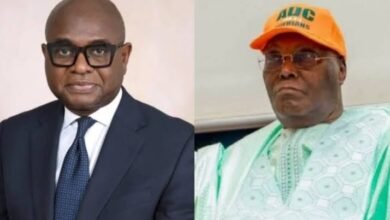
Former Vice-President Atiku Abubakar has criticised Tinubu’s decision to stay away from the General Assembly, questioning why the President has again delegated the assignment to Shettima. The Federal Government has rejected the criticism and defended the President’s decision.
Other political actors have also interpreted the absence differently.
That makes the issue politically contentious, but the political criticism should be separated from the measurable diplomatic question.
There is currently no evidence establishing that Nigeria has lost a specific diplomatic agreement, investment commitment or international position solely because Tinubu is not physically present in New York, that point matters.
WHAT NIGERIA COULD MISS
The potential cost is more difficult to measure.
A president attending UNGA can personally meet several world leaders, speak directly with international institutions and use the gathering to project his administration’s priorities.
Those encounters can sometimes lead to follow-up negotiations that are not visible immediately.
Tinubu’s absence therefore creates an opportunity cost: some presidential-level interactions have to be handled by Shettima or other officials rather than by Tinubu himself.
There is also the question of symbolism.
Nigeria is Africa’s most populous country and one of the continent’s largest economies. The physical presence of its president at major international gatherings can carry diplomatic significance beyond the substance of a particular speech.
But symbolism alone should not be confused with measurable policy results.
A well-prepared delegation can still achieve substantial diplomatic objectives.
THE IMPORTANT ISSUE IS CONTINUITY
The more important question for Nigeria is whether the country’s foreign-policy objectives remain clear and consistent regardless of who leads the delegation.
Nigeria is seeking international support and partnerships around investment, energy, development, security and reform of global institutions.
At the current UNGA, the government is also pushing for a shift from repeated humanitarian assistance towards stronger national systems for poverty reduction, protection and resilience.
Those objectives do not disappear because the President is absent.
What matters is whether the delegation has the authority, preparation and access necessary to advance them.
The President’s physical presence can strengthen some engagements, particularly those requiring direct presidential diplomacy.
The Vice-President’s representation can maintain continuity and ensure that Nigeria’s official position is presented.
Both points can be true at the same time.
SO, DOES HIS ABSENCE NEGATIVELY AFFECT NIGERIA?
There is no simple yes-or-no answer supported by the available evidence.
It does not mean Nigeria is diplomatically unrepresented. Shettima is leading the delegation, and Nigeria’s ministers, governors and officials are participating.
But presidential absence can reduce the opportunities for Tinubu himself to use the UNGA platform for direct engagement with world leaders and international investors.
The effect is therefore best understood as a question of lost opportunities rather than an established diplomatic injury.
The administration’s performance in New York will ultimately be measured less by who sits in the General Assembly hall and more by what Nigeria’s delegation secures from the meetings, negotiations and partnerships taking place around it.
That is where the real test lies.
Reloaded News — NEWS THAT INFORMS. MEDIA THAT TRANSFORMS