

Business & EconomyEnergyFact CheckNigeriaResearch & Reports
Trending
October 1 CNG Promise: How Ready Are Nigerian States for Cheaper Transport?

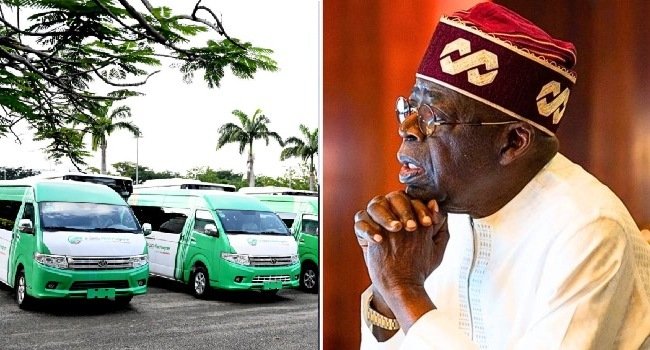
Reloaded News Analysis Desk
As Nigeria prepares for October 1, the Federal Government’s promise of cheaper transportation is facing its most important test yet; whether commuters across the country will actually begin paying less for their daily journeys.
President Bola Tinubu and the 36 state governors agreed at a meeting on August 27 that more Nigerians should begin to see measurable reductions in transportation costs from October 1.
The strategy is built around compressed natural gas (CNG), electric vehicles, government-supported mass transit and the conversion of existing commercial vehicles.
But as the deadline arrives, the country is not starting from the same position.
Some states already have functioning CNG or electric transport systems and measurable fare reductions. Others have received buses or begun conversion programmes but are still developing the infrastructure required to sustain them.
In some states, the infrastructure gap remains so significant that commercial operators are openly demanding CNG facilities.
Osun is one of them.
What the Federal Government Says Has Been Achieved
President Tinubu said on September 19 that more than 120,000 vehicles had been converted to CNG, supported by more than 400 certified conversion centres and over 90 CNG refuelling stations nationwide.
He also said Edo already had 50 CNG buses in active service, Kano had converted more than 1,000 commercial vehicles, while Delta, Kwara and Lagos were expanding CNG-supported transport services.
Akwa Ibom, he said, had taken delivery of 50 CNG buses ahead of commercial operations.
The President urged every state to work with transport unions and commercial operators, support vehicle conversion and fleet deployment, provide the necessary infrastructure and, above all, ensure that the savings from cheaper energy reach passengers through lower fares.
\The Federal Government’s position is therefore clear; the October 1 target is not simply about putting CNG buses on the roads. It is about converting the lower cost of energy into lower transportation costs for Nigerians.
Some States Have Already Demonstrated What Is Possible
There are states where the programme has moved beyond announcements.
In Kaduna, 100 CNG buses have been providing free transportation on major routes. The Presidency said the buses carried about 3.2 million passengers during their first year of operation, while state authorities have also reported that more than three million residents benefited from the scheme.
In Oyo, CNG buses deployed through Pacesetter Transport reportedly brought the Lagos-Ibadan fare down from about ₦8,000 to ₦3,200 during the initial deployment. FactCheckHub independently rated the claim as true.
In Enugu, 100 CNG buses have been deployed and the Enugu-Nsukka fare was reduced from ₦2,500 to ₦1,500 under the state-owned CNG transport scheme.
The Presidency also cited lower fares in Borno, Adamawa, Plateau, Niger and Abia, although the exact mechanisms differ. Borno has combined CNG and electric public transport; Plateau operates government-supported buses; Niger has subsidised transport on the Suleja-Abuja route; and Abia has deployed electric buses with subsidised fares.
These examples demonstrate that lower-cost transportation can be achieved when governments combine vehicles, infrastructure and fare intervention.
But they do not mean the same level of readiness exists everywhere.
The States Are Not Starting From The Same Point
Recent reporting across the states found substantial differences in preparedness.
Some states have vehicles but inadequate refuelling infrastructure.
Others have begun conversions but have not yet achieved significant deployment.
Some have functioning subsidised services, while commercial operators in other locations continue to charge conventional fares.
Transport unions have also raised concerns about inadequate consultation, conversion costs and access to refuelling facilities. The Presidential Initiative on CNG and Electric Vehicles has said the programme is being implemented through phased, state-by-state engagement rather than a single nationwide directive requiring every state to achieve the same level of deployment simultaneously.
October 1 is therefore better understood as a national implementation target for cheaper transportation, rather than evidence that every state has already completed its CNG transport system.
Osun: A Major Gap As October 1 Arrives
The situation in Osun State illustrates the challenge particularly clearly.
On September 23, commercial minibus operators in Osogbo, popularly known as Korope operators, protested rising fuel and operating costs and called for urgent government intervention.
One of their central complaints was the absence of CNG refuelling infrastructure in the state.
The operators said they were interested in converting their vehicles but needed government assistance to make conversion affordable and accessible.
One of the operators also claimed that drivers who had already converted their vehicles were struggling because there was no CNG station in Osun where they could routinely refuel.
The operators specifically called for CNG facilities in Osogbo and warned that the rising cost of petrol, spare parts and vehicle maintenance was making commercial transportation increasingly difficult.
This creates a major question for the October 1 promise.
How can CNG produce cheaper fares in Osun if commercial operators do not yet have adequate local CNG refuelling infrastructure?
That question is particularly important because Osun’s commercial transport system relies heavily on small buses and other privately operated vehicles rather than only government-owned mass-transit fleets.
The state therefore needs more than a ceremonial launch.
It needs conversion facilities, reliable CNG supply, accessible refuelling stations and a workable arrangement with the operators who actually carry commuters every day.
Lagos Shows Why Scale Matters
Lagos presents the opposite challenge.
The state has substantially greater transport infrastructure and is expanding its CNG-supported fleet, but its enormous commuter population means that a relatively small number of buses cannot transform the entire transport system.
The Federal Government recently announced the deployment of additional CNG buses in Lagos, while the state is also expanding CNG infrastructure.
Yet reports from transport operators have highlighted problems including long queues at refuelling stations and uncertainty over implementation arrangements.
The lesson is important; having CNG infrastructure does not automatically guarantee cheap transportation.
The system must be large enough and reliable enough to serve the volume of vehicles using it.
Niger Shows Another Problem: Buses Without Enough Infrastructure
Niger State provides another illustration of the infrastructure challenge.
The state has acquired CNG buses, but reports indicated that the absence of an operational CNG refuelling station was delaying their full deployment.
Several CNG plants were reportedly under construction.
The situation exposes a basic problem with the transition: government can purchase buses relatively quickly, but the supporting energy infrastructure takes longer to build.
A bus cannot provide cheap CNG transportation if it cannot reliably obtain CNG.
The Same Question Applies Across The Country
The national programme therefore has five separate components that must work together:
Vehicles must be available.
Vehicles must be converted where necessary.
CNG must be available at accessible refuelling stations.
Transport operators must be able to use the system economically.
The savings must ultimately reach passengers through lower fares.
The fifth is perhaps the most important.
A CNG vehicle can cost less to operate while the passenger continues paying the same fare.
In that situation, the country has achieved an energy transition without necessarily achieving the transportation relief promised to commuters.
That is why the President specifically directed states to ensure that cheaper energy translates into cheaper fares.
The Numbers Need To Be Tested Against The Road
The Federal Government’s figure of more than 120,000 vehicles converted to CNG is significant.
But the number alone cannot tell Nigerians how successful the October 1 programme is.
The more important questions are:
How many of those vehicles are actually operating commercially?
How many have reliable access to CNG?
How many CNG refuelling stations are operational rather than merely announced or under construction?
Which routes have lower fares?
What was the fare before the intervention?
What is the fare now?
How much does a passenger actually save?
And how many commuters are benefiting?
These are the numbers that will determine whether the programme is changing transportation economics for ordinary Nigerians.
FactCheckHub, for example, found that some claims about fare reductions require qualification. It rated several presidential claims as true but found the claimed 40 per cent fare reduction on some Abuja routes unproven after checks found commuters still paying regular commercial rates.
That makes independent monitoring particularly important.
October 1 Is Not The End Of The Programme
There is also a danger in treating October 1 as though every state must suddenly have a fully developed CNG transport network on that single day.
The Federal Government itself has described the rollout as an expanding programme involving states, the Presidential Initiative on CNG and Electric Vehicles, transport unions, operators, manufacturers and private investors.
The President’s September directive was for states to accelerate implementation and ensure that more Nigerians begin to experience measurable reductions in transportation costs from October 1.
The real test is therefore not whether every state has identical infrastructure tomorrow morning.
It is whether the programme is sufficiently developed in each state to produce a real, measurable and sustainable reduction in what commuters pay.
The National Picture
Nigeria enters October 1 with a CNG programme that is clearly larger than it was when the initiative began.
More than 120,000 vehicles have reportedly been converted, hundreds of conversion centres have been certified, and more than 90 refuelling stations are reported nationwide.
Several states have already demonstrated that CNG and electric transport can reduce fares.
But the national picture remains uneven.
Kaduna has free CNG buses. Oyo has demonstrated substantial fare reductions on the Lagos-Ibadan corridor. Enugu has reduced fares on a major inter-city route. Edo and Kano have established significant CNG operations. Lagos is expanding its network.
At the same time, Osun’s commercial operators are demanding the basic CNG infrastructure required to participate, while other states are still dealing with conversion, refuelling and deployment challenges.
That difference is the real story behind October 1.
Nigeria has begun building a CNG transportation system, but the system is not yet equally mature across the federation.
The next stage is therefore not simply to count buses or converted vehicles.
It is to measure what happens to the fare paid by the commuter.
For millions of Nigerians, the success of the October 1 promise will ultimately be measured in one place; at the bus stop, when they ask how much it costs to get home.