
88% Use Fintech Apps: How Many Nigerians Actually Have Smartphones And Internet Access?
Nigeria's Digital Economy Has A Large Untapped Population

Reloaded News Desk
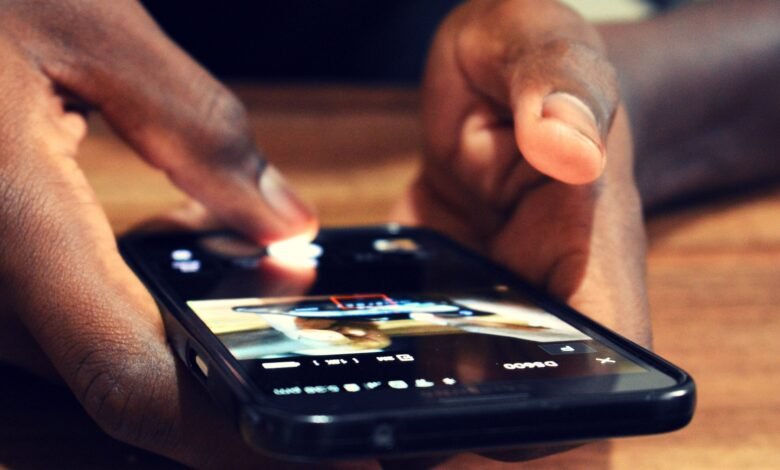
The finding that 88 per cent of Nigerian smartphone users have banking or fintech applications on their devices points to the rapid transformation of financial services in the country.
But behind that striking figure lies a bigger question; how many Nigerians actually have smartphones and how many are connected to the Internet in the first place?
The answer is less straightforward than the fintech figure suggests.
The Nigeria Smartphone Study 2025, conducted by KPMG Nigeria and Orange Group and released in September 2026, reported that smartphone penetration among its surveyed respondents had risen to 75 per cent in 2025, from 64 per cent in 2023.
The study covered 13,251 respondents across 12 major Nigerian cities, including Lagos, Ibadan, Abuja, Kano, Kaduna, Port Harcourt, Onitsha and Benin City. It found that banking and fintech applications had reached 88 per cent adoption among respondents with smartphones.
That figure, however, should not be interpreted as meaning that 88 per cent of Nigerians use fintech applications.
It means that among the smartphone users covered by the study, 88 per cent had banking or fintech applications.
109 Million Nigerians Online
DataReportal’s Digital 2026 Nigeria report estimated that Nigeria had 109 million Internet users in October 2025, representing Internet penetration of 45.5 per cent of the population.
That means an estimated 130 million people were still offline at the time of the measurement. DataReportal also cautioned that Internet-user statistics are compiled from multiple sources and can take time to become available.
The figure therefore provides a much different picture from the smartphone study.
A country can have a rapidly growing smartphone economy while a very large share of its population remains outside regular Internet use.
124.4 Million Broadband Subscriptions Does Not Mean 124.4 Million Internet Users
The latest figures from the Nigerian Communications Commission provide another number that can easily be misunderstood.
The NCC recorded 124,423,891 broadband subscriptions in July 2026.
That does not mean Nigeria had 124.4 million individual broadband users.
A subscription is a connection.
One individual can have more than one mobile line, and therefore potentially more than one broadband subscription. A person could, for example, have separate data-enabled SIMs from different operators as well as another broadband connection.
Consequently, the NCC’s 124.4 million broadband subscriptions cannot simply be subtracted from, or added to, the estimated 109 million Internet users.
They measure different things.
The same applies to mobile subscriptions generally.
The Smartphone Number Is More Complicated
There is another major data point that deserves attention.
While the KPMG/Orange study reported 75 per cent smartphone penetration among its surveyed respondents in 2025, a separate GSMA Intelligence analysis estimated that 27 per cent of Nigeria’s population owned a smartphone in 2024.
GSMA also estimated that more than two-thirds of the population remained offline, with the mobile Internet usage gap approaching 60 per cent in 2024.
The two figures should not simply be declared contradictory.
They measure different populations and use different methodologies.
The KPMG/Orange study was a structured survey of 13,251 respondents across 12 major cities, while the GSMA figure is a national population-level estimate.
But the difference is significant enough to demand caution before anyone converts the 75 per cent survey result into a claim that three-quarters of all Nigerians own smartphones.
The Real Digital Divide
Taken together, the figures reveal several different layers of Nigeria’s digital economy.
There are mobile subscriptions.
There are broadband subscriptions.
There are smartphone owners and users.
There are Internet users.
And there are smartphone users who actually use specific digital services such as fintech applications.
These are not interchangeable populations.
That distinction is particularly important as banking, payments, government services, commerce, education and employment increasingly move online.
A person may own a mobile phone without owning a smartphone.
Someone may own a smartphone without having affordable or reliable Internet access.
Someone may have Internet access but use it only occasionally.
And someone may have a smartphone and Internet connection but not use fintech applications.
The 88 per cent fintech figure therefore represents the final stage of a much larger digital-access chain.
Nigeria’s Digital Economy Has A Large Untapped Population
The numbers point to a sizeable gap between Nigeria’s growing digital economy and the number of people who can participate in it fully.
The NCC’s broadband figure shows that broadband connections have expanded substantially, reaching more than 124 million subscriptions by July 2026.
DataReportal’s estimate, meanwhile, places actual Internet users at 109 million based on data available around October 2025.
GSMA’s analysis highlights an even deeper structural problem: network availability has expanded considerably, but affordability, device ownership and usage remain barriers to bringing more Nigerians online.
This means Nigeria’s digital challenge is no longer simply about whether telecommunications networks exist.
It is increasingly about whether Nigerians can afford the devices, data and services required to use those networks meaningfully.
And that is where the 88 per cent fintech figure becomes more revealing.
It demonstrates how deeply digital financial services have penetrated the population that already has smartphones, while simultaneously raising a much bigger question about those who remain outside that ecosystem.
For businesses, banks, fintech companies and policymakers, the next major market may therefore not only be the people already using digital services.
It may be the millions of Nigerians who have yet to cross the smartphone and Internet-access threshold.
Category: Technology | Business & Economy