

Reloaded News Desk
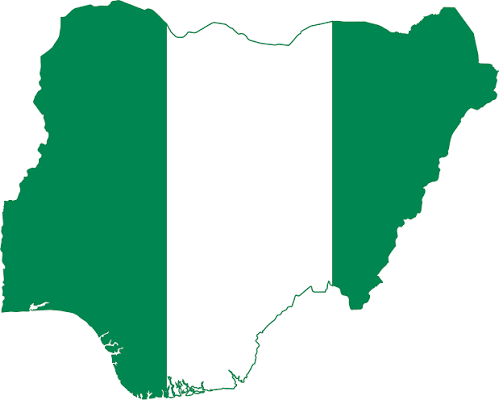
Nigeria is 66.
We have looked back at the country we inherited.
We have examined the country we have become.
Now comes the harder question; What happens next?
The answer will not be found in another Independence Day speech, another five-year plan or another list of promises.
It will be found in what Nigeria actually does with the opportunities before it.
The next chapter of the Nigerian story must be about moving from potential to productivity, from survival to prosperity and from repeatedly identifying our problems to building systems capable of solving them.
FROM POTENTIAL TO PRODUCTIVITY
For decades, Nigeria has been described as a country with enormous potential.
That description is no longer enough.
Potential that does not become productive capacity remains potential.
The next phase must therefore focus on what Nigerians produce, how efficiently they produce it and how competitively those products and services can reach Nigerian and international markets.
Nigeria needs more factories, more processing plants, more technology companies, more productive farms, more skilled workers and more businesses capable of scaling.
The question should increasingly become not what Nigeria possesses, but what Nigeria can produce with what it possesses.
ELECTRICITY MUST BECOME AN ECONOMIC PRIORITY
A productive economy requires dependable energy.
Businesses cannot build long-term plans around uncertainty over electricity.
Factories need power.
Hospitals need power.
Schools need power.
Data centres need power.
Farmers and processors need power.
Small businesses need power.
The next chapter therefore requires an electricity system capable of supporting production at scale.
The goal should not simply be more megawatts on paper.
It should be reliable electricity reaching the homes and businesses that need it.
THE JOB QUESTION
Nigeria’s young population presents both an opportunity and a responsibility.
Millions of young Nigerians will enter the labour market in the years ahead.
They need more than encouragement.
They need opportunities.
That means an economy capable of creating productive employment at scale.
Manufacturing, construction, agriculture, logistics, technology, healthcare, professional services, entertainment and other sectors must become larger sources of employment and wealth creation.
The future cannot be built around an economy in which too many people work simply to survive.
EDUCATION MUST MEET THE ECONOMY
Nigeria cannot prepare young people for the future using only the requirements of the past.
Education must increasingly connect learning with employability, enterprise and productivity.
Academic education remains important.
But technical skills, vocational training, digital skills, engineering, science and entrepreneurship must receive greater attention.
A young Nigerian should be able to leave the education system with something valuable to offer the economy.
FOOD MUST BECOME A NATIONAL ADVANTAGE
Nigeria has the land, climate and human capacity to become a much more productive agricultural economy.
But agriculture cannot remain predominantly about production without sufficient attention to storage, processing, transportation, finance, irrigation and markets.
The next chapter must be about agricultural value chains.
The farmer should not be separated from the processor.
The processor should not be separated from the market.
And the market should not be separated from the consumer.
Food production must become a larger source of income, industrial activity and employment.
FROM RAW MATERIALS TO VALUE
For too long, Nigeria’s economic conversation has focused heavily on what lies beneath the ground.
The next chapter should focus more heavily on what we can build above it.
Oil and gas will remain important, but Nigeria needs deeper value addition across its economy.
Instead of exporting raw materials and importing finished products, more of the processing should happen here.
Instead of importing products that Nigerians can competitively manufacture, domestic production should become increasingly viable.
Industrialisation is not simply about owning factories.
It is about creating interconnected production systems that generate jobs, skills, technology and wealth.
NIGERIA MUST BUILD FOR THE DIGITAL ECONOMY
One of the clearest demonstrations of Nigerian ingenuity has come from the technology sector.
Young Nigerians have built companies, payment systems, platforms and digital services used by millions.
That momentum should not be treated as a passing trend.
Nigeria needs the infrastructure, education, regulation and investment required to participate meaningfully in the global digital economy.
Artificial intelligence, software, fintech, cybersecurity, telecommunications, data infrastructure and digital services will increasingly determine economic competitiveness.
Nigeria should not be satisfied with being a large market for other people’s technology.
It should also be a place where globally competitive technology is created.
CITIES WILL DETERMINE THE FUTURE
Nigeria’s future will increasingly be urban.
That means cities must become more productive and liveable.
Transport, housing, drainage, water, sanitation, waste management, roads and public infrastructure cannot be treated as secondary concerns.
Poor urban planning eventually becomes an economic problem.
Traffic consumes productive hours.
Flooding destroys businesses and homes.
Poor transport raises the cost of doing business.
The cities of the next generation must be planned around the people and economic activities they will support.
SECURITY AND ECONOMIC FREEDOM
There is no meaningful prosperity where citizens cannot safely live, travel, farm and conduct business.
Security is therefore not separate from economic development.
A farmer who cannot reach his farm cannot produce.
A transporter who cannot safely move goods cannot sustain a supply chain.
An investor who cannot protect an investment will reconsider expansion.
The next chapter must therefore connect security with economic opportunity, institutional capacity and community stability.
INSTITUTIONS MUST OUTLIVE GOVERNMENTS
Governments will change.
Presidents will change.
Governors will change.
Ministers will change.
But the institutions of the Nigerian state must continue.
The country needs systems that do not depend excessively on who happens to occupy an office.
Professional public institutions, an efficient justice system, credible regulation, transparent processes and predictable rules are essential to long-term development.
The objective is not to find perfect leaders.
It is to build institutions capable of limiting the damage of poor decisions and preserving the benefits of good ones.
THE PRIVATE SECTOR MUST THINK BEYOND SURVIVAL
Nigerian businesses have demonstrated remarkable resilience. But resilience alone is not enough.
The next stage requires scale.
More businesses must move from informal survival to formal growth.
More companies must invest in people, technology, research, quality and long-term capacity.
Nigeria needs businesses that can employ thousands, manufacture competitively, export products and build institutions that survive their founders.
GOVERNMENT CANNOT DO EVERYTHING
The next chapter also requires a clearer understanding of the relationship between government and citizens.
Government must provide security, infrastructure, regulation and essential public services.
But government cannot be the employer, investor and problem-solver for everyone.
Citizens and businesses must create wealth.
Investors must take risks.
Entrepreneurs must build.
Professionals must develop expertise.
Communities must take responsibility for their environments.
Nation-building is ultimately a shared enterprise.
THE DIASPORA IS PART OF THE FUTURE
Millions of Nigerians and people of Nigerian origin live outside the country.
Their contribution should not be measured only in remittances.
They possess skills, networks, capital, technology and international experience that can contribute to Nigeria’s development.
The next chapter should make it easier for Nigerians abroad to invest, build companies, transfer knowledge and participate in national development.
A COUNTRY THAT THINKS LONG-TERM
Perhaps one of Nigeria’s greatest challenges is the temptation to think only about the immediate.
The next election. The next budget. The next appointment. The next crisis.
But nations are built over decades.
Infrastructure takes decades.
Human capital takes decades.
Industrial capacity takes decades.
Strong institutions take decades.
Nigeria needs policies and investments that can survive political cycles.
WHAT THE NEXT GENERATION SHOULD INHERIT
The generation coming after us should not inherit exactly the same problems we inherited.
They should inherit better systems.
Better schools.
Better infrastructure.
More productive industries.
More reliable electricity.
More opportunities.
More efficient institutions.
A stronger economy.
A safer environment in which to live and work.
And, perhaps most importantly, a country that gives its citizens a genuine reason to believe that hard work can lead somewhere.
THE NEXT CHAPTER IS ALREADY BEGINNING
Nigeria does not have to wait until some distant future before progress becomes visible.
The next chapter is already being written in Nigerian factories, farms, laboratories, universities, technology companies, hospitals, studios, classrooms and businesses.
It is being written by entrepreneurs building companies.
By teachers educating children.
By engineers solving problems.
By farmers producing food.
By doctors saving lives.
By young Nigerians creating technology.
By workers showing up every morning.
By citizens who continue to believe that their country can become better.
The responsibility of this generation is to ensure that these individual efforts are supported by systems capable of turning them into national progress.
At 66, Nigeria has accumulated enough history.
The task now is to turn experience into wisdom, resources into productive capacity and ambition into results.
The next chapter should not simply ask what Nigeria can become.
It should ask what Nigeria is prepared to do.
Because the future will not arrive by itself.
It will be built by the choices we make today.
Nigeria is 66. The journey behind us is history. The reality before us is clear.
The next chapter is ours to write.
NEWS THAT INFORMS, MEDIA THAT TRANSFORMS