
A Reloaded News Special Report: PETER MBAH AND THE ENUGU TRANSFORMATION AGENDA
Projects, Reforms, Investments and the Making of a New Enugu


A Reloaded News Special Report
INTRODUCTION: A NEW DIRECTION FOR ENUGU
Since assuming office on May 29, 2023, Governor Peter Ndubuisi Mbah has pursued an ambitious programme aimed at changing the development outlook of Enugu State.
Built around the administration’s Tomorrow Is Here philosophy, the programme places infrastructure, education, healthcare, security, agriculture, industrial development and institutional reforms at the centre of its development agenda.
The ambition is to move Enugu beyond conventional public administration and position it as a competitive economic destination with stronger infrastructure, improved public services, expanded investment opportunities and a more productive economy.
At the heart of this vision is a target to grow the state’s economy from an estimated $4.4 billion to $30 billion. It is an ambitious objective that has shaped the administration’s approach to public investment, revenue generation, industrial development and the mobilisation of private-sector participation.
More than three years into the administration, the scale of its development programme is reflected in projects and interventions spread across the state’s 17 local government areas.
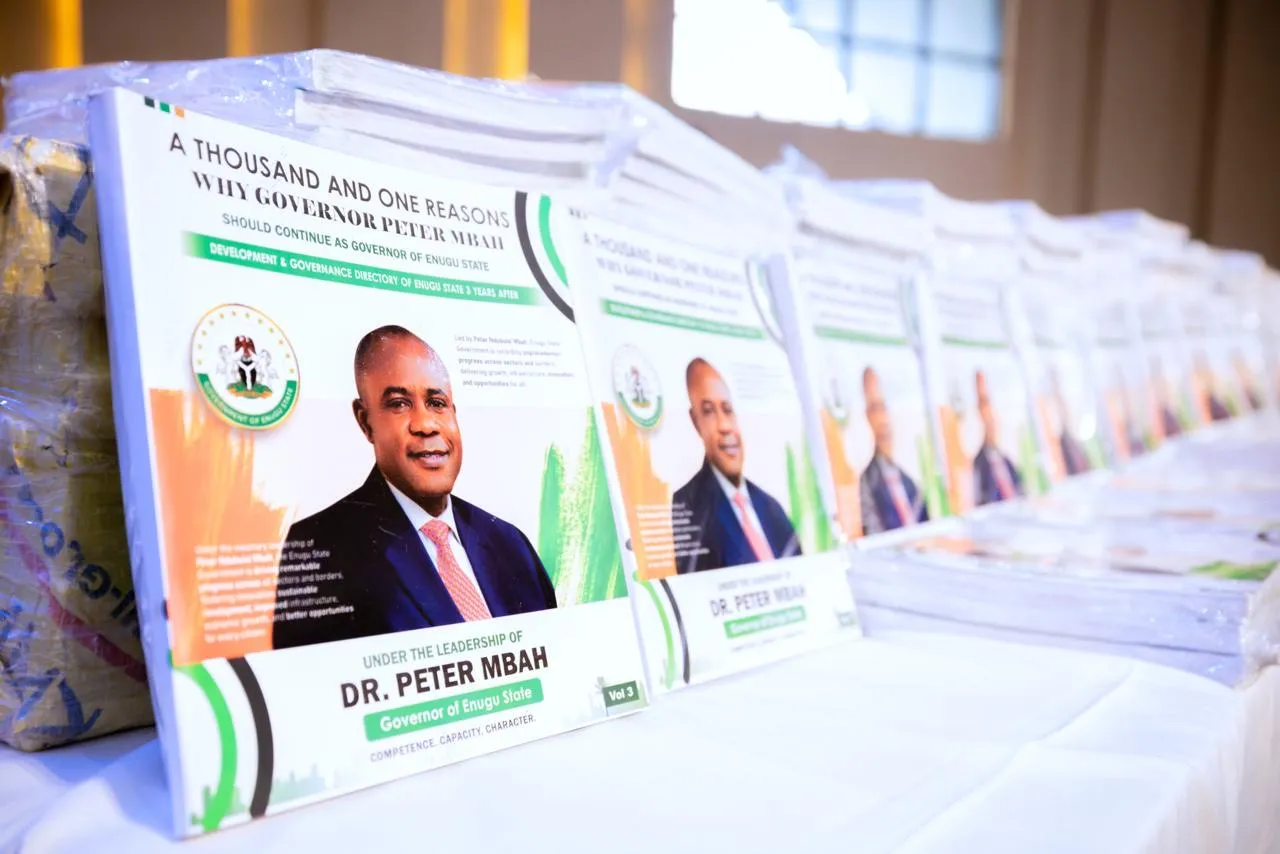
In September 2026, the state government unveiled a compendium documenting more than 10,000 milestones attributed to the administration. The document highlighted over 1,521 kilometres of constructed and reconstructed roads, more than 7,000 classrooms, 260 Type-2 Primary Healthcare Centres, Enugu Air, the New Enugu Smart City and the revival of previously inactive public assets.
The Governor also presented a manifesto performance update on October 29, 2026, reviewing the administration’s journey since taking office and outlining its development ambitions.
These developments provide a picture of a government pursuing transformation through large-scale public investment and institutional restructuring.
The significance of the programme lies not only in the number of projects being undertaken, but in the broader development strategy connecting them: improving access to essential services, strengthening economic infrastructure, attracting investment and creating opportunities for residents and businesses.
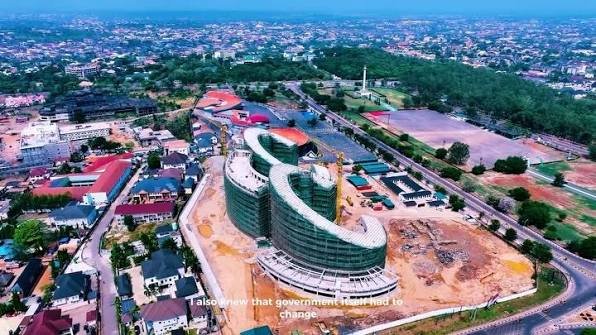
1. THE VISION: BUILDING A $30 BILLION ECONOMY
The ambition to grow Enugu’s economy from $4.4 billion to $30 billion is one of the defining elements of the Mbah administration’s development philosophy.
The target reflects an understanding that sustainable economic growth requires more than government expenditure. It requires productive infrastructure, a skilled workforce, stronger industries, improved agricultural output, investment-friendly institutions and an environment in which businesses can operate and expand.
The administration has therefore pursued a development model that connects physical infrastructure with economic opportunity.
Road construction is intended to improve the movement of people and goods. Investment in education is designed to strengthen the state’s human capital. Healthcare infrastructure is expected to improve access to medical services and support a healthier population. Industrial and agricultural initiatives are intended to expand production and create employment.
The strategy also places emphasis on increasing internally generated revenue and improving the management of public resources.
The administration’s approach is based on the proposition that Enugu can build a stronger economic foundation by using public investment to stimulate private enterprise, attract investors and expand productive activity.
This is a long-term undertaking. Achieving the $30 billion target will depend on the ability to sustain investment, improve productivity, create jobs and build an economic environment capable of supporting growth across different sectors.
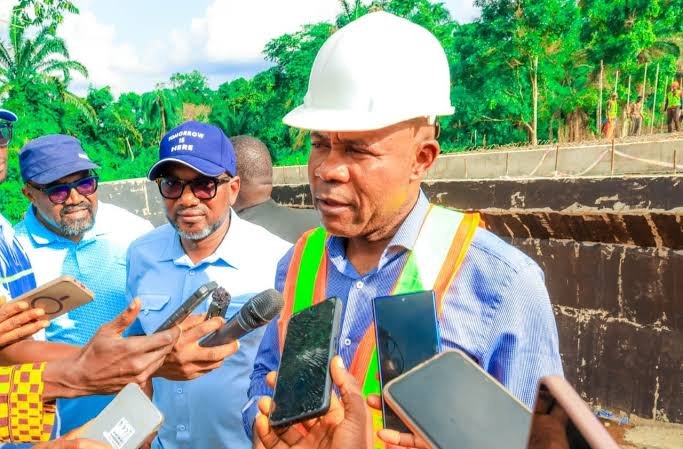
2. INFRASTRUCTURE: CONNECTING COMMUNITIES AND OPENING ECONOMIC CORRIDORS
Infrastructure development has become one of the most visible features of the administration’s activities.
The September 2026 government compendium reported more than 1,521 kilometres of roads constructed or reconstructed across Enugu State. The figure represents a major component of the administration’s infrastructure programme, which covers urban roads, rural connections and strategic corridors.
Road infrastructure is central to economic development because it determines how easily people reach workplaces, farmers transport produce, businesses distribute goods and communities access essential services.
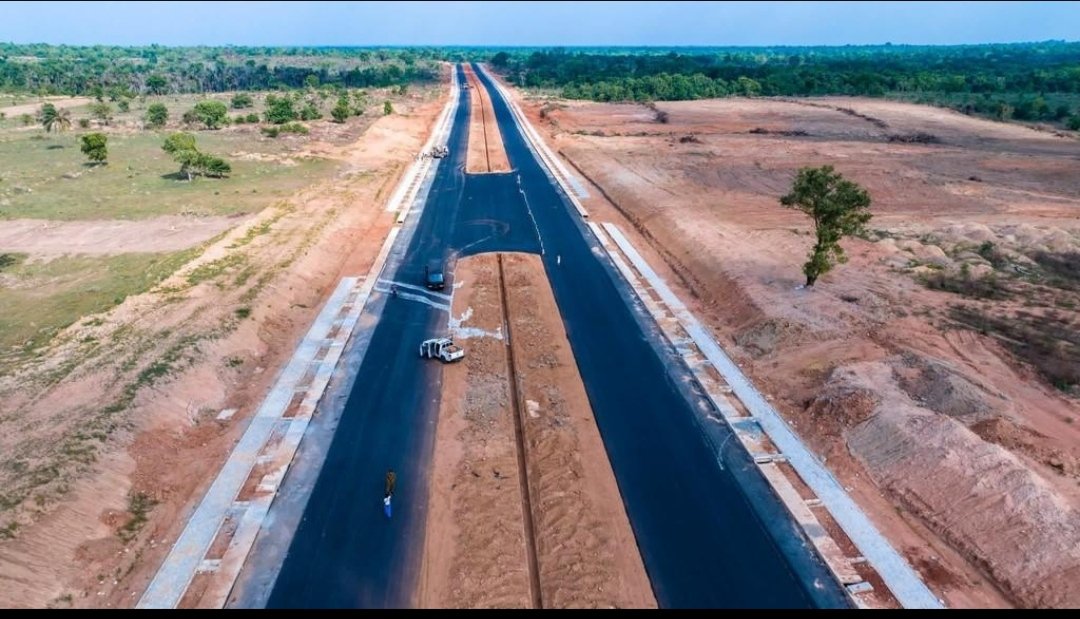
Among the major projects are the 38-kilometre Owo–Ikem dual carriageway and the 14.3-kilometre Amaechi-Idodo–Amagunze Road.
The Ministry of Works reported in October 2026 that construction on the Owo–Ikem corridor was advancing towards completion. On the Amaechi-Idodo–Amagunze Road, the asphalt wearing course and road markings had been completed, with the project awaiting formal commissioning.
The administration has also undertaken road construction and rehabilitation within Enugu metropolis and other urban centres, with the objective of improving connectivity and supporting the state’s expanding commercial and residential activities.
The rural road programme is particularly important to communities whose economic activities depend on agriculture, trade and movement between neighbouring towns.
Improved road connections can reduce travel difficulties, support access to markets and strengthen the relationship between rural production centres and urban consumers.
Beyond the immediate benefit of easier transportation, the programme is intended to create an infrastructure network capable of supporting the state’s wider economic ambitions.
3. NEW ENUGU CITY: PLANNING FOR THE FUTURE
The New Enugu City project represents one of the administration’s most ambitious urban development initiatives.
The project is designed to create a modern urban environment with planned road networks, residential areas, commercial facilities and infrastructure capable of supporting future population and economic growth.
The idea reflects the administration’s belief that Enugu’s future development requires deliberate urban planning and the creation of new centres of economic activity.
New Enugu City is intended to provide space for residential expansion, investment, business development and modern urban services. Its development is also connected to the administration’s wider ambition of making the state more attractive to investors and businesses.
During an inspection in October 2026, the Ministry of Works reported that the primary road network had been completed, while construction on secondary and tertiary roads was continuing.
The State Executive Council also approved the construction of 1,000 five-bedroom terrace housing units within the new city in September 2026.
The project is significant because planned urban development can provide an opportunity to organise growth around infrastructure rather than allow expansion to occur without adequate roads, utilities and public facilities.
The long-term ambition is to establish a modern urban district that supports residential living, commercial activity and investment while complementing the existing Enugu metropolis.
4. EDUCATION: INVESTING IN THE NEXT GENERATION
Education occupies a central position in the Mbah administration’s development agenda.
The government has consistently presented education as a strategic investment in the future workforce and a necessary foundation for achieving its economic objectives.
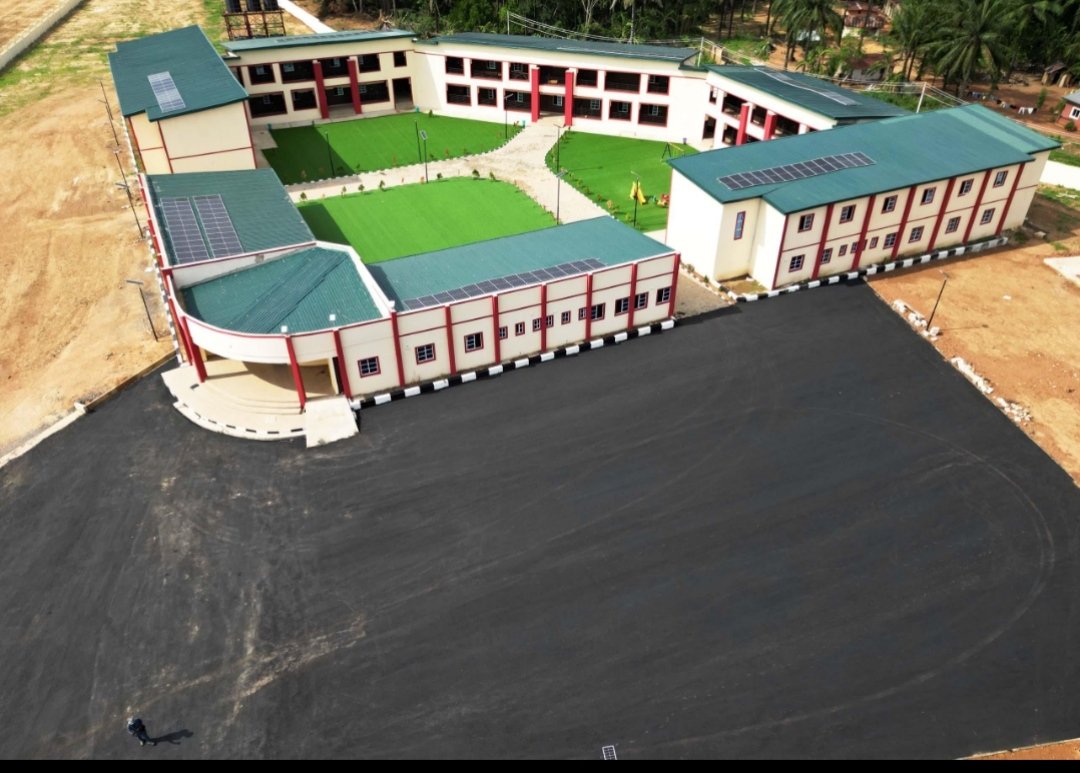
One of the flagship interventions is the Smart Green Schools programme, designed to establish modern schools across the state’s 260 electoral wards.
The initiative seeks to improve the physical learning environment while introducing technology, digital learning facilities, science laboratories and an experiential approach to education.
The administration’s September 2026 milestone compendium reported more than 7,000 classrooms. At the October 2026 Education Summit, the government also presented its wider education reforms and unveiled the Enugu State Education Policy.
The policy is intended to provide a framework for the development of the sector over the coming years, covering access, quality, teacher development, learning outcomes and the use of technology.
The administration has also emphasised teacher recruitment and capacity development as necessary complements to infrastructure investment.
In September 2026, Governor Mbah said his administration had recruited 6,850 teachers and other education personnel. The government also reported that education had received 33 per cent of the state’s budget across three budget cycles.
The programme is built on the understanding that modern education requires more than classrooms. It requires qualified teachers, appropriate learning materials, effective school management and an environment that encourages creativity, critical thinking and practical problem-solving.
The Smart Green Schools initiative is therefore part of a broader attempt to prepare young people for an economy increasingly shaped by technology, innovation and specialised skills.

5. HEALTHCARE: EXPANDING ACCESS TO MEDICAL SERVICES
The administration’s healthcare programme is focused on expanding access to primary healthcare while strengthening specialist medical infrastructure.
A major component is the establishment of 260 Type-2 Primary Healthcare Centres across the state’s electoral wards.
The initiative is intended to bring basic medical services

closer to communities, particularly those whose residents may otherwise travel considerable distances to access healthcare.
The planned facilities are designed to support routine treatment, maternal and child healthcare, immunisation, preventive medicine and referrals to higher-level hospitals.
The administration has also pursued the development of the 300-bed Enugu International Hospital, a major specialist healthcare project intended to strengthen the state’s capacity to provide advanced medical services.
The facility forms part of a broader ambition to improve healthcare infrastructure, attract medical expertise and expand the range of services available within Enugu.
The administration’s healthcare investments also include the upgrading of existing facilities and the development of infrastructure at the State University of Medical and Applied Sciences, Igbo-Eno.
The long-term objective is to build a stronger healthcare system in which primary healthcare facilities provide effective community-level services while specialist hospitals handle more complex medical needs.
6. ENUGU AIR: STRENGTHENING CONNECTIVITY AND ECONOMIC ACCESS
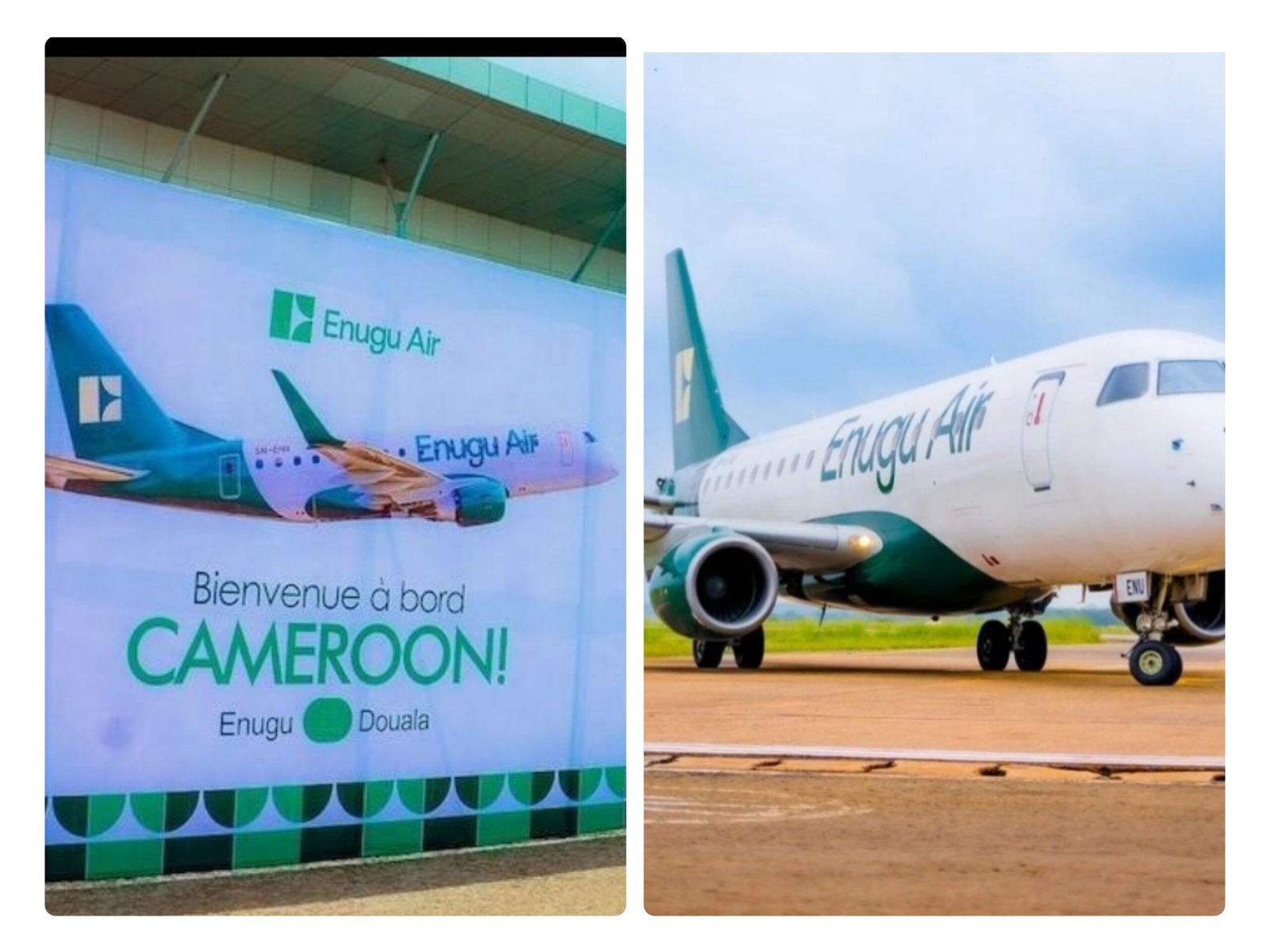
The establishment of Enugu Air is one of the administration’s major interventions in the transportation and aviation sector.
The airline commenced operations in July 2025 as part of the government’s ambition to strengthen Enugu’s connectivity and improve its position as a commercial and investment destination.
In March 2026, Enugu Air received its Air Operator Certificate from the Nigerian Civil Aviation Authority, completing an important stage in its regulatory development.
The airline commenced operations with six aircraft, according to the state government’s announcement of the certification.
The administration has also outlined plans for fleet expansion and regional operations, with the objective of connecting Enugu to additional domestic and international markets.
Aviation connectivity can support economic development in several ways. It improves access for investors, facilitates business travel, supports tourism and creates opportunities for trade and logistics.
For a state seeking to attract investment and expand its commercial activities, reliable air transportation can be an important competitive advantage.
The Enugu Air initiative is therefore connected to the administration’s wider ambition of positioning the state as a regional centre for commerce, logistics and investment.
7. INDUSTRIAL REVIVAL: RESTORING THE VALUE OF PUBLIC ASSETS
The revival of inactive and underperforming public assets is another important feature of the administration’s economic programme.
Enugu has a history of industrial and commercial activity, and the government has sought to restore the productive value of several facilities that had become inactive or operated below their potential.
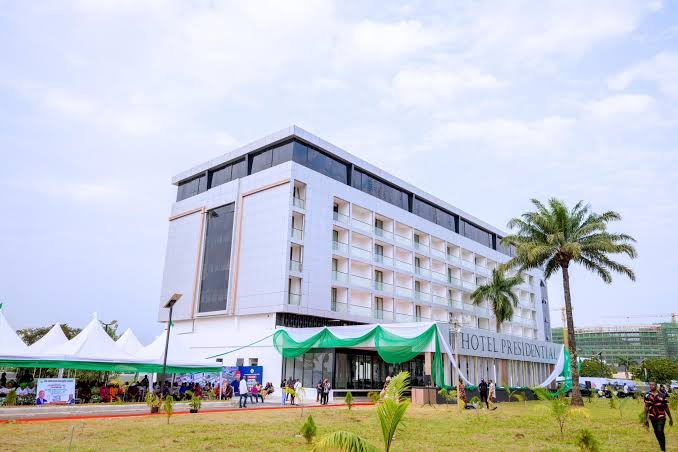
Among the assets associated with the revival programme are Sunrise Flour Mill, United Palm Products, Nigergas and Hotel Presidential.
The objective is to reposition these facilities for productive use, encourage investment and create opportunities for employment and economic activity.
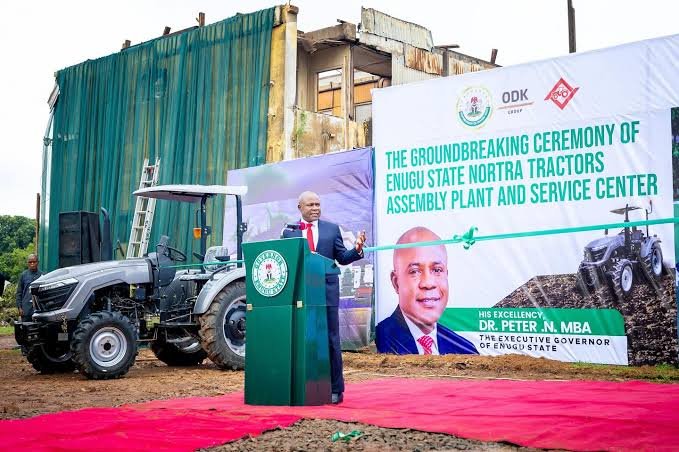
The administration has also pursued new industrial initiatives, including the Nortra tractor assembly project and manufacturing investments.
These efforts are intended to strengthen the state’s productive base and reduce the gap between economic potential and actual industrial activity.
Industrial development has important implications for the wider economy. Manufacturing creates demand for raw materials, transport, energy, skilled labour and business services. It can also support the growth of small and medium-sized enterprises within industrial supply chains.
The administration’s strategy recognises that a stronger economy requires productive enterprises capable of generating employment and contributing to internally generated revenue.
8. AGRICULTURE: BUILDING A MORE PRODUCTIVE RURAL ECONOMY
Agriculture remains an important part of Enugu State’s economic structure, providing livelihoods for many households and supplying food and raw materials to markets and industries.
The Mbah administration has identified agricultural modernisation as an important component of its economic transformation agenda.
Its initiatives include Smart Farm Estates, mechanisation and efforts to encourage more organised agricultural production.
The government has reported the development of farm estates across the state’s 17 local government areas, with the intention of supporting commercial farming and improving agricultural productivity.
The tractor assembly initiative is also relevant to the administration’s agricultural ambitions. Mechanisation can help farmers improve land preparation, increase operational efficiency and expand production capacity.
The broader objective is to move agriculture beyond subsistence production towards a more organised and commercially productive sector.
This requires stronger connections between farmers, processors, storage facilities, markets and distribution networks.
The administration’s agricultural programme is therefore closely linked to its industrial development strategy. A stronger agricultural sector can supply raw materials to manufacturing businesses, while local processing can create additional value and employment.

9. SECURITY: CREATING A SAFER ENVIRONMENT FOR ECONOMIC ACTIVITY
Security is an important foundation for the administration’s development agenda.
The government has linked its security interventions to the restoration of normal economic and social activities across the state.
At the October 2026 manifesto performance update, Governor Mbah identified the restoration of normal Monday economic activity as an important development since the beginning of his administration.
The issue has economic significance because insecurity and disruptions to movement affect businesses, schools, markets, transportation and household incomes.
The administration has also invested in security infrastructure, including a Safe City surveillance system, command-and-control facilities and patrol vehicles.
These interventions are intended to strengthen monitoring, improve coordination and support the response capacity of security agencies.
The administration’s position is that a safer environment is necessary for investment, tourism, education and commercial activity.
For Enugu to achieve its ambition of becoming a stronger economic destination, security must remain a sustained priority.

10. WATER, ENVIRONMENT AND URBAN SERVICES
Access to water and effective urban services are essential to public health, business activity and quality of life.
The Mbah administration has identified water supply as one of the longstanding infrastructure challenges requiring major intervention.
Its programme has included the rehabilitation of water infrastructure and efforts to improve supply to Enugu metropolis.
The 2026 budget presentation highlighted the rehabilitation of the Ajali and Oji River water schemes and the development of the Ninth Mile water infrastructure.
The administration has presented these projects as part of its effort to improve water availability for households, schools, businesses and public institutions.
Water supply is also important to industrial and commercial development. Businesses require reliable access to water, while households need safe and affordable supply for everyday use.
The wider urban development programme also includes environmental sustainability, drainage, waste management and the improvement of public spaces.
These services may receive less attention than major road or building projects, but they are essential to the functioning of a modern city.
11. TOURISM, HOSPITALITY AND THE VISITOR ECONOMY
Enugu has significant tourism and hospitality potential, supported by its cultural heritage, historical attractions, natural landscapes and commercial importance in the South-East.
The administration has sought to strengthen the state’s tourism profile through infrastructure investment and the revival of hospitality assets.
The rehabilitation and repositioning of Hotel Presidential is part of the wider effort to restore the value of public assets and strengthen the state’s hospitality sector.
Tourism development can create opportunities across several areas, including hotels, transportation, food services, entertainment, cultural events, creative industries and small businesses.
A stronger visitor economy can also support local employment and provide additional income opportunities for communities.
The administration’s wider ambition is to make Enugu a destination for business, leisure, conferences and investment.
 12. GOVERNANCE REFORMS AND PUBLIC FINANCIAL MANAGEMENT
The administration’s development programme has been accompanied by efforts to reform public finance and improve the management of government institutions.
The state government has identified revenue automation, reforms at the Enugu State Internal Revenue Service, the Treasury Single Account, enterprise resource planning and institutional restructuring among its reforms.
These measures are intended to strengthen revenue administration, improve financial controls and enhance the efficiency of government operations.
The Citizens Charter, established through Executive Order 001, is another important part of the administration’s governance framework. It is intended to strengthen the relationship between government commitments and public accountability.
The administration’s 2026 budget, presented in December 2025, was designed to consolidate infrastructure investment and support its wider economic development objectives.
The budget placed significant emphasis on capital expenditure, reflecting the government’s intention to continue funding major projects and public infrastructure.
The underlying principle is that a state seeking rapid development must improve not only the amount of resources available to government, but also how those resources are collected, managed and deployed.
 13. THE LARGER VISION: WHY ENUGU NEEDS CONTINUITY
The projects and programmes pursued by the Mbah administration are connected by a broader ambition to reposition Enugu State, expand its economic capacity and establish a stronger foundation for sustainable development.
Roads are intended to improve connectivity. Schools are expected to strengthen human capital. Healthcare facilities are designed to bring medical services closer to communities. Aviation and transport investments are aimed at improving access, while industrial and agricultural initiatives seek to expand production, create employment and attract investment. Governance reforms, in turn, are intended to strengthen public institutions and improve service delivery.
Taken together, these interventions represent an attempt to move Enugu towards a more productive, competitive and investment-driven economy.
The administration’s September 2026 performance compendium and October manifesto performance update provide an extensive account of its stated achievements and development priorities. They also offer a basis for assessing the direction of the state’s development since May 2023.
As the 2027 governorship election approaches, the question of continuity becomes an important part of the conversation about Enugu’s future. The case for a second term for Governor Peter Mbah rests on the argument that the scale and interconnected nature of the administration’s development programme require sustained implementation.
Major infrastructure projects, economic reforms and institutional changes are not always completed within a single four-year tenure. Their full value often emerges through consistent execution, consolidation and the opportunity to build on foundations already established. A change in leadership could bring a different policy direction, while continuity would give the incumbent administration an opportunity to complete ongoing projects, strengthen existing reforms and pursue the longer-term economic ambition it has set for the state.
There is, therefore, a case to be made for allowing the current administration additional time to consolidate its programme. That case is supported by demonstrable results, responsible management of public resources and a willingness to address areas where implementation remains incomplete.
For Peter Mbah, the next phase will be particularly important. Roads must remain serviceable; schools must deliver improved learning outcomes; healthcare facilities must provide reliable services; industrial investments must translate into sustained production and employment; and public-private partnerships must deliver value to the state and its people.
Hence, a second term would represent an opportunity to move from establishing the foundations of his development agenda to deepening its impact. It would also place greater responsibility on the administration to demonstrate that the investments and reforms undertaken since 2023 can produce measurable improvements in the lives of Ndi Enugu.
Ultimately, the argument for continuity is an argument about the future direction of the state. Enugu’s development ambitions require consistency, institutional strength and sustained commitment. The decision before its people in 2027 will include an assessment of what has been achieved, what remains unfinished and which leadership can best take the state forward.
The transformation agenda is therefore bigger than the construction of projects. It is about building the eco]nomic and institutional capacity required to sustain development.
The story of Enugu’s transformation is still unfolding. The case for a second term is that Governor Peter Mbah should have the opportunity to consolidate the foundations already laid, complete the work in progress and take the state’s development ambition into its next phase.
Reloaded News — NEWS THAT INFORMS. MEDIA THAT TRANSFORMS