

ECOWAS Free Movement: Nigeria Moves to Tighten Border Monitoring Without Closing Borders

Reloaded News Desk
Nigeria is seeking to preserve the ECOWAS free-movement regime while strengthening the identification, documentation and monitoring of people crossing its borders.
The Director-General of the National Boundary Commission, Adamu Adaji, said on Sunday that the free movement of people and goods under the ECOWAS framework should not prevent Nigerian authorities from knowing who enters or leaves the country.
Adaji made the position known in an interview with the News Agency of Nigeria in Abuja.
He said illegal routes remained a challenge and stressed the need to identify and profile people using such routes.
The position reflects the growing tension between West Africa’s long-standing regional integration policy and the security challenges facing countries across the sub-region.
Nigeria remains committed to the ECOWAS free-movement principle, but authorities are increasingly focusing on border surveillance, documentation and intelligence as they confront terrorism, kidnapping, arms trafficking and other cross-border crimes.
The National Boundary Commission has also disclosed that Nigeria is strengthening surveillance of difficult border terrain through drones, satellite imagery and other technologies.
Adaji said improved monitoring would help authorities manage Nigeria’s international borders more effectively.
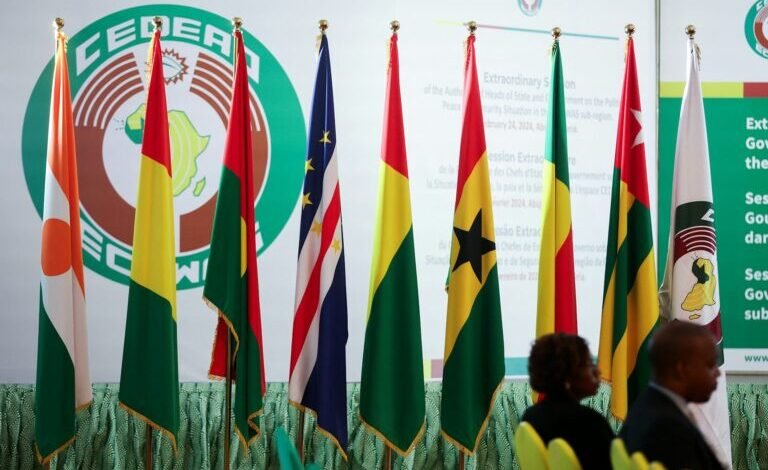
The issue has gained additional importance following the withdrawal of Burkina Faso, Mali and Niger from ECOWAS and the emergence of the Alliance of Sahel States.
The three countries have established their own regional framework while the remaining ECOWAS members continue to operate the bloc’s established protocols on movement, trade and regional integration.
Nigeria therefore faces the task of securing its extensive borders without undermining a regional system that was designed to make movement of people, goods and services easier across West Africa.
The Federal Government’s current position is not a withdrawal from free movement.
It is an attempt to make movement compatible with stronger border controls, identification systems and security monitoring.
The success of that approach will depend heavily on the ability of Nigerian border agencies to distinguish legitimate regional movement from criminal activity while avoiding measures that unnecessarily obstruct lawful travellers and traders.
For ECOWAS, the issue goes beyond Nigeria.
The credibility of regional integration depends partly on whether free movement can coexist with the security realities confronting member states.