

₦300 FARES, GREATER RELIEF: OKPEBHOLO’S CNG BUSES AND THE ECONOMICS OF COMPASSION
The Lessons From Edo State For Other Governors.

By Reloaded News Desk
For thousands of Nigerians, transportation is no longer just a means of getting from one destination to another. It has become a significant component of household expenditure, affecting how much families can save, what traders earn, how workers commute and whether students can attend school without placing additional pressure on their parents.
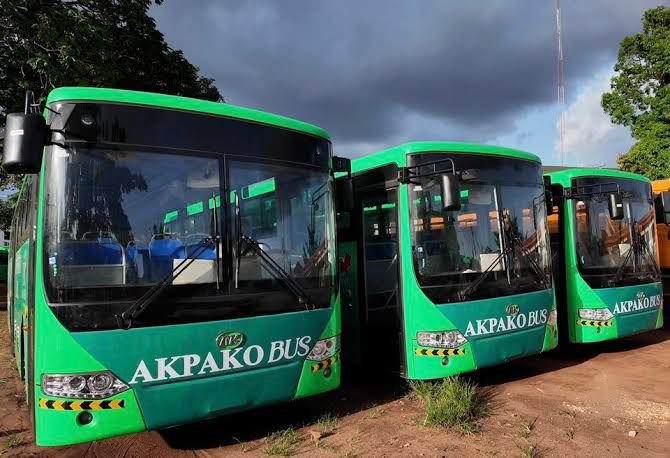
Against this background, the introduction of Compressed Natural Gas (CNG)-powered buses by the Edo State Government under Governor Monday Okpebholo presents an important intervention in the ongoing conversation about affordable public transportation.
With a reported fare of ₦300 on designated journeys, the initiative raises a fundamental economic question: how much difference can affordable public transportation make to the daily lives of ordinary people?
The answer goes beyond the amount passengers pay at a bus terminal. It touches on household purchasing power, economic participation, productivity and the responsibility of government to make essential public services accessible.
Beyond the Buses: The Economics of Affordable Transportation
On October 15, 2026, Nigeria’s First Lady, Senator Oluremi Tinubu, inaugurated 50 CNG buses acquired by the Okpebholo administration in Benin City.
The deployment is intended to strengthen the Edo City Transport Service (ECTS) and provide residents with an alternative to conventional commercial transportation.
The Presidential Initiative on Compressed Natural Gas and Electric Vehicles has also identified a proposed ₦300 fare for the Kingsquare–Ugbowo–Oluku corridor under Edo State’s transport intervention programme. The fare structure is significant because it demonstrates how alternative energy can be used to support more affordable mobility.
The initiative forms part of the Federal Government’s wider National Affordable CNG Transit Programme, which seeks to ensure that the lower operating costs associated with alternative energy translate into reduced transport fares for passengers.
How ₦300 Can Make a Difference
The economic implications of affordable transportation are best understood through the everyday experiences of commuters.
Consider a worker who makes two journeys daily, spending ₦600 on transportation at a fare of ₦300 per journey. Over 26 working days, that amounts to ₦15,600.
For a commuter who would otherwise spend ₦600 on each journey, the daily transport expenditure would be ₦1,200, amounting to ₦31,200 over the same period.
The difference is ₦15,600 monthly.
That money could contribute to food purchases, children’s school expenses, healthcare, savings or other household necessities.
For traders, artisans, small-business operators and workers whose income is already stretched by operating expenses, transportation savings can also improve the amount available for productive activities.
This is the wider economic significance of a lower bus fare: money that would otherwise disappear into daily transportation expenditure can remain available for other needs.
Public Transportation as Social and Economic Infrastructure
Affordable transportation is frequently treated as a welfare intervention. However, its importance extends into economic development.
A functioning public transport system connects workers to employment opportunities, traders to markets, students to educational institutions and businesses to customers.
When transportation becomes prohibitively expensive, people may reduce their movement, reject employment opportunities farther from home or increase the prices of goods and services to recover their transport expenses.
Conversely, accessible and affordable transportation can reduce these barriers.
For this reason, government-supported mass transit should be understood not merely as the provision of buses but as investment in the movement of people, goods, services and economic activity.
The introduction of 50 CNG buses therefore provides an opportunity to strengthen Edo’s public transportation system and improve the mobility of residents.
The CNG Advantage and the Question of Sustainability
The adoption of CNG offers a potential operating-cost advantage over petrol and diesel, depending on fuel prices, maintenance requirements, vehicle efficiency and the availability of refuelling infrastructure.
However, the economic benefits of CNG-powered transportation are not automatic.
The savings achieved through cheaper fuel must be reflected in the fares paid by commuters. This is the central principle behind the Federal Government’s alternative-energy transport programme.
The Presidential Initiative on CNG and Electric Vehicles has emphasised that the real measure of success is not simply the number of vehicles converted or buses deployed, but whether passengers experience meaningful reductions in transportation costs.
In Edo State, the Commissioner for Transportation, Saturday Uwuilekhue, has said the buses have joined the ECTS fleet and commenced operations. He also disclosed that the state had acquired mobile CNG refuelling units to support their operations.
This is an important operational consideration. A fleet of 50 buses can only deliver sustained public value if the vehicles are regularly maintained, adequately fuelled and deployed on routes where passenger demand is significant.
The Lessons From Edo’s Earlier Mass Transit Experience
Edo State has a history of government-supported public transportation.
The Edo City Transport Service, popularly associated with the Comrade Bus initiative introduced under former Governor Adams Oshiomhole, provided residents with a cheaper alternative to conventional commercial transport.
The service attracted considerable passenger demand, including students who benefited from free transportation under the earlier scheme.
However, the subsequent decline in the number of operational buses exposed a recurring challenge in public-sector transport initiatives: acquiring vehicles is only the beginning. Maintaining them, replacing ageing units, ensuring operational efficiency and providing adequate coverage are equally important.
The new CNG fleet presents an opportunity to build on that experience.
The government will need to ensure that the new buses do not merely generate excitement at commissioning but remain operational and accessible to commuters in the years ahead.
The Real Test: Accessibility, Coverage and Accountability
The success of the initiative should be measured against practical outcomes.
Are the buses available when commuters need them? Do they cover important residential, commercial and educational routes? Are waiting times reasonable? Can passengers depend on the service during peak periods? Are the fares consistently maintained?
These questions matter because a low fare has limited economic value if commuters cannot access the buses or if the service is too restricted to meet their daily transportation needs.
There is also a need for transparency regarding the designated routes, fare schedules, operating hours and passenger numbers.
As the fleet expands, regular public reporting on its performance would help residents assess the value being delivered and encourage accountability in the management of the transport service.
Compassion Measured by Practical Outcomes
The phrase “economics of compassion” captures an important principle of public administration: policies should ultimately be assessed by their impact on people’s everyday lives.
For a low-income worker, the difference between spending ₦1,200 and ₦600 on a daily commute is not merely a statistical improvement. It can represent money available for food, rent, school fees or other essential responsibilities.
For a trader, it can mean retaining more of the proceeds from daily business. For a student, it can make the journey to school more manageable. For a family, it can reduce the pressure on an already constrained household budget.
Governor Monday Okpebholo’s 50-bus CNG initiative has the potential to contribute to these outcomes. Its long-term value, however, will depend on consistent operations, transparent management, adequate infrastructure and the government’s ability to sustain affordable fares.
Ultimately, the true measure of the initiative will not be the number of buses unveiled, but the number of commuters who can depend on them, the money they save and the economic opportunities that become more accessible.
Affordable transportation is more than a convenience. It is an economic necessity.
Reloaded News — NEWS THAT INFORMS. MEDIA THAT TRANSFORMS