

By Reloaded News Desk
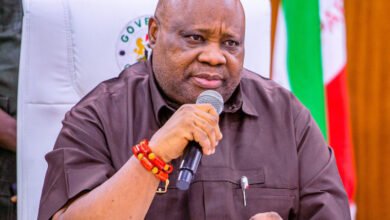
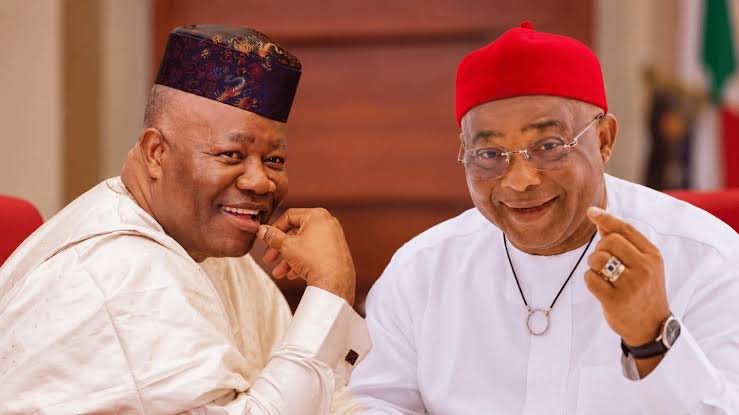
A battle for the leadership of Nigeria’s 11th National Assembly is gathering momentum within the ruling All Progressives Congress (APC), with Senate President Godswill Akpabio seeking another term while Imo State Governor Hope Uzodimma is reportedly positioning himself to succeed him.
The contest has moved into public view ahead of the January 16, 2027 National Assembly elections, exposing competing interests over who will control the Senate after the next general election.
The tension became more visible on October 15 when senators openly declared support for Akpabio’s return, alongside Deputy Senate President Barau Jibrin and other principal officers, insisting that there was no vacancy in the Senate presidency of the incoming assembly.
The declaration followed a voice vote in the Senate, signalling the determination of Akpabio’s supporters to establish an early position on the leadership question.
However, the membership of the 11th Senate has yet to be determined by voters, and the incoming senators will ultimately elect their presiding officers when the new assembly is inaugurated.
Akpabio has left little doubt that he wants to retain the Senate presidency.
At the inauguration of the APC Presidential Campaign Council at the State House in Abuja on October 14, he appealed directly to President Bola Tinubu to support the return of lawmakers who would stand behind the president’s re-election bid.
In what appeared to be a pointed reference to Uzodimma, Akpabio also cautioned governors against seeking other political offices before completing their current responsibilities.
Although he did not mention the Imo governor by name, the remarks came amid reports that Uzodimma was interested in succeeding him.
Akpabio, a former governor of Akwa Ibom State, is seeking to retain a position that places its occupant among Nigeria’s most influential political officeholders.
His appeal to Tinubu highlights the importance of presidential influence in the contest, although the president’s support alone cannot determine who will emerge as Senate President.
Uzodimma’s reported ambition has introduced another heavyweight into the unfolding contest.
The Imo governor is the APC’s candidate for Imo West Senatorial District in the January 2027 elections. He previously represented the district in the Senate between 2011 and 2019 before becoming governor in 2020.
His second term as governor is due to end in January 2028. If he wins the senatorial election and leaves office in accordance with the applicable constitutional and legal requirements, he could return to the upper chamber before his governorship tenure expires.
Uzodimma also serves as secretary of Tinubu’s presidential campaign organisation, placing him within the president’s political structure.
At the inauguration of the campaign council, he emphasised that the president’s electoral prospects were linked to those of other APC candidates, including himself.
However, Uzodimma has not publicly confirmed in the reported remarks that he intends to challenge Akpabio for the Senate presidency. His reported interest should therefore be distinguished from a formally declared candidacy for the leadership position.
Former APC National Chairman Adams Oshiomhole has also been mentioned in political reporting as a possible contender for the Senate presidency.
The Edo North senator’s reported interest adds another dimension to the contest, particularly against the background of previously reported tensions between him and Akpabio.
Oshiomhole brings experience as a former governor, party chairman and senator.
The emerging picture is one of competing political calculations involving incumbent legislative leaders, influential former and serving governors, and party figures with established political structures.
The declaration that there is no vacancy in the Senate presidency has raised a fundamental question about the authority of the outgoing assembly to determine the leadership of its successor.
The current Senate can endorse its preferred candidates and express confidence in its leadership. Such a declaration, however, cannot automatically bind senators who will constitute the next assembly.
Under Nigeria’s legislative arrangements, the newly elected senators will elect their presiding officers when they assemble for the inauguration of the 11th National Assembly, expected in June 2027.
The January 2027 elections will first determine which candidates secure the 109 senatorial seats. The leadership contest will then be decided within the new Senate.
Consequently, the declaration of support for Akpabio and Barau is politically significant but does not guarantee that either will retain their position.
The outcome will depend on electoral results, the balance of power within the incoming chamber and the ability of competing camps to secure the support of their colleagues.
The contest presents the APC with a delicate political calculation.
The party must manage competing ambitions among influential members while preparing for elections in which control of the National Assembly will remain important to the president’s legislative programme.
An early endorsement of Akpabio could help consolidate support for continuity. However, if other influential party figures pursue the position, the leadership question could become a source of negotiation and disagreement within the party.
The situation also raises questions about the balance between presidential influence and the constitutional independence of the legislature. While political parties and presidents can influence legislative leadership contests, senators retain the formal responsibility to elect their presiding officers.
For now, the public exchanges and reported ambitions point to an intensifying struggle rather than proof of a full-blown crisis within the APC.
The decisive phase will come after the January 2027 elections, when the composition of the new Senate becomes clear and competing camps begin the final negotiations for its leadership.
Until then, Akpabio’s bid for continuity and the reported interest of potential challengers will remain important indicators of the political calculations shaping the next National Assembly.
Reloaded News — NEWS THAT INFORMS. MEDIA THAT TRANSFORMS.