
A Century of Conviction: Reuben Fasoranti’s Life of Learning, Service and Leadership
The educator, public servant and Afenifere leader who died at 100 carried the ideals of the Awolowo generation through Nigeria’s political upheavals, leaving a legacy rooted in education, democratic advocacy and public service.

By Reloaded News Desk
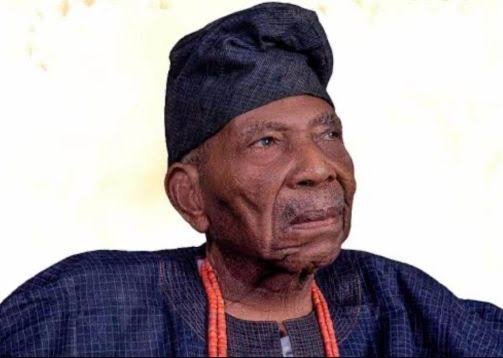
Pa Reuben Famuyide Fasoranti, the national leader of the pan-Yoruba socio-political organisation, Afenifere, has died at the age of 100, bringing to an end a century-long life associated with education, progressive politics, democratic activism and advocacy for Yoruba interests.
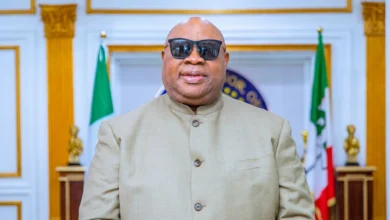
Ondo State Governor Lucky Aiyedatiwa announced his death in a statement personally issued on Tuesday, October 20, 2026, describing the late elder statesman as a symbol of wisdom, integrity and selfless service whose contributions to Ondo State, Yorubaland and Nigeria would be greatly missed.
“With a heavy heart but with total submission to the will of God, I announce the passing of our revered elder statesman, Pa Reuben Famuyide Fasoranti, who departed this world at the glorious age of 100,” the governor said.
Aiyedatiwa said Fasoranti’s life was marked by an enduring commitment to public service and the development of society.
“His counsel, fatherly guidance and principled stand on issues of justice and good governance will be sorely missed. He lived a fulfilled life and left indelible footprints of honour and legacy for generations to come,” the governor added.
On behalf of the Ondo State Government and its people, Aiyedatiwa extended condolences to the Fasoranti family, the people of Akure Kingdom and residents of the state, praying for the peaceful repose of the deceased’s soul.
A century of education and public service
Born on May 11, 1926, Fasoranti celebrated his centenary in May 2026, having lived through Nigeria’s colonial era, independence, the First Republic, military rule and the return to democratic governance in 1999.
He was trained as an educationist, a profession that shaped the early part of his life and remained an important component of his public service.
Fasoranti attended Ondo Boys’ High School and Yaba Higher College in Lagos before proceeding to the University College, Ibadan, now the University of Ibadan, where he studied English and Geography.
He subsequently obtained a postgraduate diploma in education from the University of Hull in the United Kingdom and a master’s degree in education administration and school management from Macquarie University in Australia.
His career in education included teaching at Ondo Boys’ High School and serving as principal of Oyemekun Grammar School and Iju-Itaogbolu Grammar School.
He later established educational institutions, including Omolere Nursery and Primary School and Akure High School, contributing to the development of education in Ondo State.
His experience as a teacher and school administrator preceded a more prominent role in politics, where he became associated with the progressive political tradition of the late Chief Obafemi Awolowo.
From Awolowo’s political tradition to Afenifere leadership
Fasoranti was a committed follower of Awolowo and participated in the progressive political movement represented by the Action Group during the First Republic.
He later became associated with the Unity Party of Nigeria, which Awolowo founded during the Second Republic.
Between 1979 and 1983, Fasoranti served as Commissioner for Finance in the old Ondo State under the administration of the late Governor Michael Adekunle Ajasin.
His involvement in public administration placed him within the generation of politicians who helped shape the political and governance experience of southwestern Nigeria during the Second Republic.
Beyond elective and appointed political positions, Fasoranti became one of the prominent figures in Afenifere, a Yoruba socio-political organisation rooted in the progressive ideals associated with Awolowo.
Following the death of Pa Abraham Adesanya, Fasoranti emerged as the leader of the organisation, assuming a position that made him an important voice in discussions about Yoruba political interests and Nigeria’s constitutional future.
Under his leadership, Afenifere continued to advocate restructuring, true federalism, equitable resource distribution, good governance and a political arrangement that would give the federating units greater autonomy.
These positions featured prominently in national debates over the structure of the Nigerian federation, the distribution of powers between the federal and state governments, and the need to address perceived imbalances in the country’s political system.
His role in the struggle against military rule
Fasoranti’s political journey extended beyond party politics and public administration to the struggle for democratic governance.
During the years of military rule, particularly under the regime of the late General Sani Abacha, he was associated with the pro-democracy movement that demanded the restoration of constitutional government.
He was linked to the National Democratic Coalition (NADECO), a prominent pro-democracy platform that challenged military rule and demanded the restoration of democracy following the annulment of the June 12, 1993 presidential election.
His activism reportedly exposed him to considerable personal danger. President Bola Tinubu, in his centenary tribute published in May 2026, recalled that Fasoranti survived an assassination attempt attributed to agents of the Abacha regime.
The experience formed part of a difficult period in Nigeria’s political history, when activists and opposition figures faced intimidation and other forms of pressure for challenging military authority.
Fasoranti nevertheless remained an influential participant in political discussions long after Nigeria returned to civilian rule in 1999.
His interventions on restructuring, constitutional reform, security and governance continued to attract attention because of his standing within Afenifere and his association with the Awolowo political tradition.
Despite his long public life, Fasoranti also experienced profound personal loss.
In July 2019, his daughter, Funke Olakunrin, was killed in an attack by gunmen along the Ondo-Ore Expressway.
Her death generated widespread public concern and renewed national debate about insecurity, highway attacks and the safety of travellers.
The incident was particularly painful because it involved the family of an elder statesman who had spent decades participating in national affairs and advocating for the protection of citizens’ rights.
The killing also became part of wider discussions about the security challenges confronting communities and road users across the country.
Fasoranti’s death comes months after President Bola Tinubu celebrated his 100th birthday on May 11, 2026.
In a centenary tribute issued by the State House on May 10, Tinubu described him as an elder statesman, administrator, pro-democracy activist and prominent Afenifere leader, highlighting his contributions to the country and his commitment to public service.
The President also acknowledged Fasoranti’s influence in the progressive political movement and his longstanding support for democratic governance.
Tinubu’s tribute reflected the historical relationship between the late elder statesman and the progressive political tradition that shaped much of southwestern Nigeria’s political development.
Ogun State Governor Dapo Abiodun also mourned Fasoranti’s death, describing it as a significant loss to the Yoruba nation and Nigeria.
Abiodun said the late Afenifere leader was among the enduring voices in Nigeria’s democratic struggle, noting his commitment to justice, equity, good governance and restructuring.
The governor extended his condolences to the Fasoranti family, Afenifere, the Ondo State Government and other Nigerians affected by the loss.
A legacy that spans generations
Fasoranti’s life covered virtually every major phase of Nigeria’s modern political development, from colonial administration and independence to military dictatorship and the present democratic dispensation.
His legacy extends across education, public administration, progressive politics and advocacy for the interests of the Yoruba people.
For Afenifere, his death represents the loss of a leader who occupied a prominent position in the organisation’s political history and who continued to participate in national conversations well into advanced age.
His passing also raises questions about the future leadership of the organisation and the continuity of the political ideals associated with the Awolowo tradition. However, no succession arrangement or funeral programme was confirmed in the initial announcements of his death.
As tributes continue to emerge, Fasoranti will be remembered for his long engagement with public affairs, his educational contributions and his participation in the struggle for democratic governance.
He leaves behind his family, associates and a political legacy that will remain part of the history of Afenifere, Ondo State and Nigeria.
May his soul rest in peace.
Reloaded News — NEWS THAT INFORMS. MEDIA THAT TRANSFORMS.