
Nigeria’s Electricity Puzzle: Nigerians Pay More, Government Still Carries Subsidy Burden; What If Government Doesn’t Subsidize
Band A customers pay as much as ₦209.50 per unit, yet some report receiving only a few hours of electricity

Reloaded News Investigation Desk
Nigeria’s electricity crisis is becoming increasingly difficult to explain from the perspective of ordinary consumers.
In the second quarter of 2026, electricity distribution companies collected ₦603.64 billion from customers, while the Federal Government incurred ₦321.26 billion in electricity subsidy obligations, according to the Nigerian Electricity Regulatory Commission (NERC).
The government’s subsidy obligation for the first half of the year stood at ₦679.58 billion.
Yet the amount of money moving through the electricity market has not translated into dependable electricity for many consumers.
The experience of some Band A customers illustrates the problem.
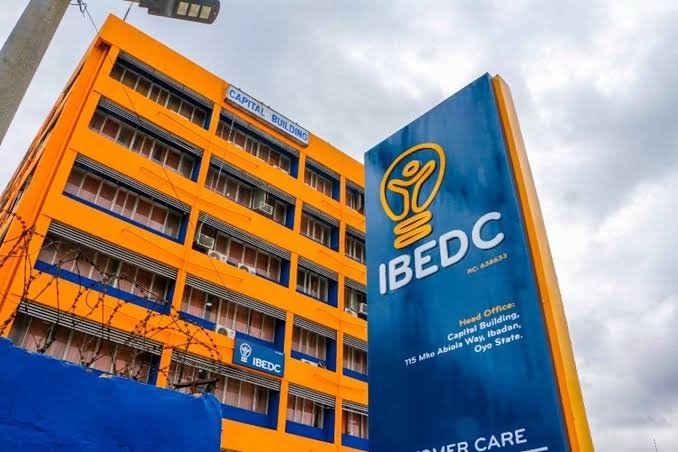
Under the Ibadan Electricity Distribution Company (IBEDC), the approved Band A tariff is ₦209.50 per kilowatt-hour. Band A customers are expected to receive a minimum of 20 hours of electricity supply per day.
But some customers classified as Band A report receiving substantially less than that, with supply sometimes lasting only two, five or six hours in a day, and occasionally disappearing completely for an entire day.
This creates a serious gap between the tariff being paid and the service being delivered.
IBEDC itself acknowledged significant Band A service shortfalls earlier this year and commenced special compensation for more than 50,000 eligible Band A customers affected by supply disruptions between February and March 2026.
The wider electricity market also continues to carry substantial inefficiencies.
NERC reported that DisCos recorded an average 36.23 per cent ATC&C loss in Q2 2026, significantly above the sector’s target of 16.92 per cent. The losses represented an estimated ₦129.07 billion in revenue loss across the distribution companies.
The subsidy figure also requires careful interpretation. The ₦321.26 billion reported by NERC is a subsidy obligation arising from the gap between regulated end-user tariffs and the cost of supplying electricity under the market framework. It does not mean that every consumer paying a particular tariff is receiving a direct subsidy on every unit consumed.
For Band A customers paying ₦209.50 per unit, the more immediate issue is whether the service level attached to that tariff is actually being delivered.
The numbers therefore point to a deeper problem than electricity pricing alone.
Consumers are paying billions of naira. Government is carrying hundreds of billions of naira in subsidy obligations. DisCos are collecting hundreds of billions of naira, while significant technical, commercial and collection losses remain within the system.
At the consumer end, however, many households and businesses still spend heavily on generators, fuel and alternative power because grid supply remains unreliable.
Nigeria’s electricity challenge therefore requires more than another tariff adjustment. It requires greater transparency across the value chain, strict enforcement of service commitments, reduction of technical and commercial losses, improved metering and collection, adequate gas supply, stronger transmission and distribution infrastructure, and clear accountability for the money flowing through the market.
For Band A customers, particularly those paying around ₦209.50 per unit, the basic expectation is straightforward; the higher tariff must correspond with the promised level of electricity supply.
News that informs, Media that Transforms.