
Nigeria at 66: Stabilisation Is Not Yet Prosperity, Odunowo Says
Tinubu Support Group Chairman acknowledges economic gains but says Nigerians are yet to feel broad-based recovery

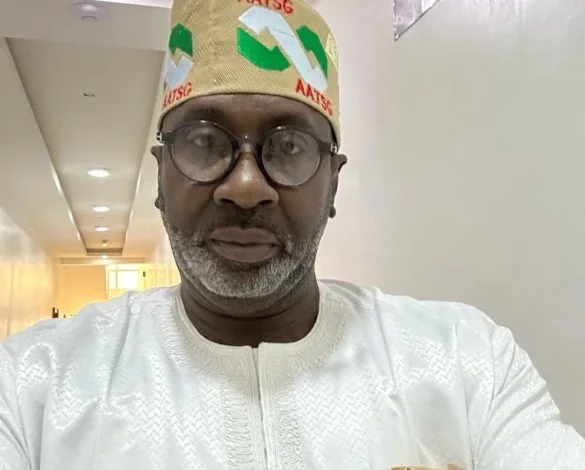
Otunba (Dr) Abdulfalil Abayomi Odunowo, National Chairman of the Asiwaju Ahmed Tinubu Support Group (AATSG), has acknowledged signs of macroeconomic stabilisation under President Bola Ahmed Tinubu but cautioned that stabilisation should not be mistaken for prosperity.
In an assessment of the President’s Independence Day address, Odunowo argued that Nigeria’s economic story at 66 should neither be reduced to celebration nor condemnation, but examined through the distinction between economic stabilisation, economic recovery and economic prosperity.
He said the three concepts were not interchangeable.
According to Odunowo, Nigeria has recorded meaningful improvements in several macroeconomic indicators. The International Monetary Fund estimates that the Nigerian economy grew by 4.0 per cent in 2025 and projects growth of 4.1 per cent in 2026. Inflation, which reached 34.8 per cent at the end of 2024, had fallen substantially, although the IMF reported a slight increase to 15.4 per cent year-on-year in March 2026 following renewed pressure from global food and fuel prices.
He also pointed to stronger external buffers. The IMF reported that gross international reserves increased to about $46 billion in 2025, while net international reserves rose to $35 billion at the end of the year.
For Odunowo, these developments should be acknowledged regardless of political affiliation.
But he argued that the improvement in macroeconomic indicators has not automatically translated into an improvement in the purchasing power or living conditions of ordinary Nigerians.
Falling Inflation Does Not Mean Falling Prices
One of the central arguments in Odunowo’s assessment is the distinction between falling inflation and falling prices.
He noted that when inflation falls, it means that prices are rising more slowly; it does not mean that prices have returned to their previous levels.
A household whose food expenditure increased dramatically during the inflationary surge of 2023 and 2024 does not automatically recover simply because the rate at which prices are increasing has slowed.
Unless incomes subsequently rise sufficiently to restore purchasing power, he argued, households can continue to experience severe financial pressure even while government and economists point to falling inflation.
This, according to Odunowo, explains how government can truthfully report macroeconomic improvement while an ordinary Nigerian can equally truthfully say that life remains extremely difficult.
The IMF’s assessment provides support for that distinction. While describing Nigeria’s recent reforms as having produced improved macroeconomic outcomes and greater resilience, the Fund also estimated that poverty had reached 63 per cent on the national poverty line and that about 27 million Nigerians faced food insecurity in the autumn of 2025.
Nigeria’s Problems Did Not Begin in 2023
Odunowo rejected the argument that Nigeria’s current economic difficulties can be attributed entirely to the Tinubu administration.
He said the country’s structural weaknesses had accumulated over decades under successive civilian and military governments.
Among the long-standing problems he identified were dependence on petroleum revenues, inadequate refining capacity, unreliable electricity, weak transport infrastructure, insufficient productive employment and a history of exchange-rate distortions.
He also pointed to the long-running cost of petrol subsidies. NEITI has estimated that Nigeria spent approximately ₦13.7 trillion on petrol subsidies between 2005 and 2021.
Odunowo argued that the subsidy regime had therefore become a significant fiscal burden and that reforms were necessary.
However, he stressed that acknowledging the need for reform does not mean that every aspect of its implementation, sequencing or social consequences should be beyond scrutiny.
“The Medicine Also Has Side Effects”
Odunowo took particular issue with what he described as the tendency to present economic reforms only through their intended benefits.
He referenced President Tinubu’s comparison of Nigeria to a cancer patient requiring painful treatment rather than continued reliance on morphine.
While accepting the logic of the analogy, he argued that treatment must also be judged by whether the patient survives and ultimately recovers.
The removal of petrol subsidies and the restructuring of the foreign-exchange market addressed genuine distortions, he said, but also produced major consequences for transportation, food prices, imported inputs, manufacturing costs and household purchasing power.
The IMF similarly noted that ending fuel subsidies, liberalising the exchange rate and tightening macroeconomic policy had reduced fiscal vulnerabilities, rebuilt external buffers and improved foreign-exchange market functioning, while also acknowledging that the reforms contributed to a sharp rise in inflation and that conditions remain difficult for many Nigerians.
For Odunowo, the relevant questions now are not simply whether reforms were necessary, but whether they were properly sequenced, whether vulnerable Nigerians were sufficiently protected and whether the government itself reduced the cost of governance while citizens were being asked to make sacrifices.
He also asked how quickly increased government revenue would translate into better electricity, healthcare, education, roads, security, transportation and employment.
“The Emergency Is Over” May Be Premature
Odunowo also challenged the declaration that Nigeria’s economic emergency had ended and that the foundation had been repaired.
He argued that macroeconomic stabilisation does not automatically mean that Nigeria’s social and economic emergency has ended.
Poverty, food insecurity, unemployment, insecurity and high production costs remain major challenges.
The IMF’s 2026 assessment similarly warned that poverty and food insecurity remained significant concerns and that higher fuel and food prices could worsen the situation.
Odunowo said these realities matter because they determine whether GDP growth remains a statistic or becomes something Nigerians actually experience in their homes.
His preferred conclusion is therefore that Nigeria may have made meaningful progress in macroeconomic stabilisation, but the household welfare emergency cannot yet be declared over.
Nigeria Needs More Than Four Per Cent Growth
Odunowo described growth of about four per cent as encouraging, but argued that Nigeria needs to look beyond the headline GDP figure.
With millions of young Nigerians entering working age every year, he said the country needs growth that translates into higher productivity, sustainable employment and increased output per person.
He urged Nigerians to ask how many factories are opening, how many sustainable jobs are being created, how many small businesses are surviving, how agricultural production is increasing, how much manufacturing capacity is being utilised and whether real wages are improving.
For him, the ultimate test is not simply whether GDP is expanding but whether economic growth is reducing poverty and improving livelihoods.
Foreign Investment Must Mean More Than Portfolio Inflows
Odunowo also cautioned against treating every increase in foreign capital as evidence of productive economic transformation.
He distinguished between foreign portfolio investment, which can move rapidly in response to financial-market conditions, and foreign direct investment, which generally represents longer-term commitments to productive enterprises, infrastructure, technology and employment.
Nigeria, he argued, needs both, but should particularly seek investment that expands productive capacity and creates sustainable employment.
The real test of economic stability, he said, will be whether it begins attracting substantial long-term investment into Nigerian production.
Food Must Become a National Priority
Odunowo identified food security as another major test of economic transformation.
He argued that Nigeria cannot convincingly speak of widespread prosperity while millions of citizens struggle to feed themselves.
According to him, the country possesses significant agricultural potential, but potential alone does not put food on people’s tables.
Farmers need security, irrigation, mechanisation, affordable fertiliser and quality seeds, rural roads, storage, processing facilities, affordable finance and reliable markets.
He therefore called for food security to be treated not merely as an agricultural issue but as a national security, infrastructure and productivity challenge.
Electricity Remains a Critical Test
Odunowo also placed electricity at the centre of Nigeria’s economic transformation challenge.
He questioned how Nigeria could pursue industrialisation, manufacturing, agricultural processing and a globally competitive digital economy without reliable and affordable electricity.
Current electricity data underscore the scale of the challenge. NERC reported installed grid-connected capacity of 13,625MW in April 2026, but average available capacity for dispatch was only 4,286MW. In August, average available capacity was 4,758MW, according to the regulator.
Odunowo argued that electricity should therefore become one of the clearest measurements of whether Nigeria is genuinely undergoing economic transformation.
“You cannot industrialise without electricity,” he argued, pointing to the consequences of unreliable power for manufacturers, agricultural processors and digital businesses.
Government Revenue Must Produce Visible Results
Another major question raised by Odunowo concerns government revenue.
He argued that if the reforms have succeeded in increasing public revenue, the national conversation should increasingly shift from how much government collects to what Nigerians receive in return.
He identified roads, healthcare centres, schools, electricity, irrigation, agricultural storage, rail infrastructure, security and employment as the kinds of measurable outcomes citizens should demand.
“Revenue is an input. Human development is the outcome,” he argued.
The IMF has similarly identified stronger revenue mobilisation as an opportunity to create additional fiscal space for growth-enhancing spending.
“This Is Bigger Than President Tinubu”
Odunowo maintained that Nigeria’s economic difficulties should not be reduced to one President, one political party or one election.
He pointed to the country’s oil and gas resources, agricultural land, solid minerals, large domestic market, Atlantic access, entrepreneurial population and large diaspora as assets that have long given Nigeria the potential to become a major global economy.
Yet, he said, the country continues to struggle with inadequate electricity, poverty, healthcare and education deficits, infrastructure gaps and insecurity.
He described these challenges as a collective national failure accumulated across generations and administrations.
But he added that historical responsibility cannot become an excuse for present-day government.
Every administration inherits problems, he argued, but every administration must ultimately be judged by what it does with what it inherited.
The Real Test Begins Now
For Odunowo, the next phase of the economic programme should therefore be measured by outcomes Nigerians can see and feel.
Inflation must continue to fall. Food must become more affordable relative to incomes. Real wages must recover. Electricity must improve. Agricultural production must increase. Manufacturing must expand. Businesses must gain access to affordable credit. Security must improve. And millions of productive jobs must be created.
Only then, he argued, can macroeconomic recovery become human recovery.
His central conclusion is that neither pessimism nor triumphalism adequately captures Nigeria’s position at 66.
There are genuine signs of macroeconomic improvement, and Odunowo said those gains should not be denied simply because someone opposes the government.
But he equally argued that the hardship experienced by ordinary Nigerians should not be dismissed simply because some economic indicators have improved.
The President has spoken of the beginning of an age of prosperity.
Odunowo’s response is that Nigeria must now undertake the more difficult task of converting stabilisation into prosperity.
For him, prosperity cannot be measured by inflation figures, foreign reserves or GDP alone.
It must ultimately be measured by whether workers can adequately feed their families, farmers can safely cultivate their land, businesses can produce competitively, young Nigerians can find productive work, families can access healthcare without financial ruin, and children can receive quality education regardless of their background.
At 66, Odunowo argues, Nigeria should demand measurable outcomes rather than political rhetoric.
If the reforms have repaired the foundations, he said, Nigerians should increasingly see what is being built upon them.
If government revenue has increased, citizens should see the infrastructure.
If investment is returning, they should see factories and jobs.
If agriculture is improving, they should eventually feel it in food prices.
And if the economy is recovering, Nigerian families should eventually feel the improvement in their purchasing power.
That, he argued, should be the national measurement—not propaganda, opposition rhetoric or political affiliation, but results.
Nigeria may have changed economic direction, Odunowo concluded, but the destination cannot yet be declared reached.
The next chapter, he said, must be about transforming improved macroeconomic statistics into improved Nigerian lives.
Otunba (Dr) Abdulfalil Abayomi Odunowo
National Chairman, Asiwaju Ahmed Tinubu Support Group (AATSG)
NEWS THAT INFORMS, MEDIA THAT TRANSFORMS