
Osun APC Crisis Deepens As Party Divided On Osun Tinubu Campaign Council, Oyetola, Oyebamiji, Lawal Others Absent At Inauguration
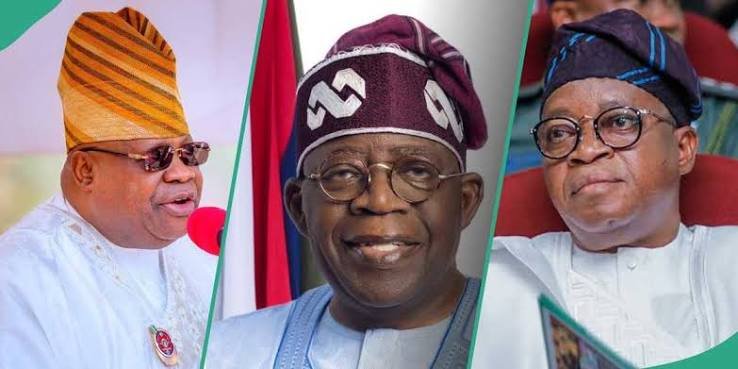
While prominent APC leaders attended the inauguration of Governor Ademola Adeleke-led Tinubu re-election campaign council, the state party chairman said the APC was not consulted, exposing tensions over party structures, political authority and the future of cooperation ahead of the 2027 elections.

By Reloaded News Desk
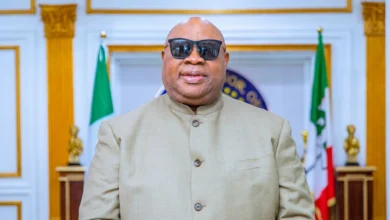
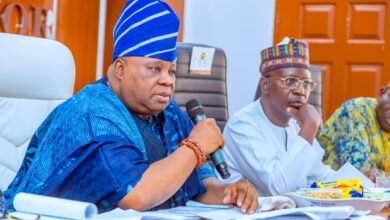
The inauguration of the Osun State Presidential Campaign Council for President Bola Ahmed Tinubu’s re-election has exposed a disagreement within the All Progressives Congress (APC), with prominent party figures attending the ceremony in Osogbo while the state chapter’s chairman protested that the party was not briefed or consulted before the event.
Former Osun State Governor and APC chieftain, Chief Bisi Akande; former presidential aide Senator Babajide Omoworare; APC National Secretary, Senator Ajibola Basiru; former APC National Secretary, Iyiola Omisore; the Osun Central APC senatorial leader; Hon. Adelakun; former deputy governor of the Osun, Mrs Titi-Laoye Ponle; Alhaji Shuaibu Oyedokun; Prof. Olu Aina; and Prof. Sola Adeyeye, Hon. Israel Famurewa were among the prominent party leaders who attended the inauguration.
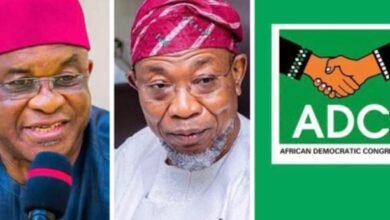
Their presence demonstrated that influential figures within the APC participated in the campaign council’s inauguration. However, the absence of key figures, including former Governor Gboyega Oyetola, the party’s 2026 governorship candidate, Bola Oyebamiji, and state chairman Sooko Tajudeen Lawal, alongside the chairman’s subsequent public objection, has raised questions about the level of agreement within the party over the new campaign arrangement.
At the heart of the disagreement is Governor Ademola Adeleke’s appointment to coordinate Tinubu’s re-election campaign in Osun, despite his political history outside the APC, and the state party leadership’s complaint that it was not properly involved in organising the council.
The development presents a delicate political situation; while several prominent APC leaders have participated in the new arrangement, the state chairman says the process excluded the party leadership and risks creating an avoidable misunderstanding between the APC and the governor.
In a statement issued shortly before the inauguration, Lawal said the Osun APC was not briefed about the event and learnt of the proposed council through a list of names published on social media by Adeleke’s spokesperson, Olawale Rasheed, on Wednesday afternoon.
The inauguration was held on Thursday, October 22, in Osogbo, following the announcement that Adeleke would coordinate the state campaign for Tinubu’s re-election ahead of the January 16, 2027 election.
Lawal stressed that the APC remained committed to Tinubu’s re-election, describing it as a collective responsibility for party leaders, members and supporters. He nevertheless questioned the manner in which the campaign council was constituted and the short notice given before the inauguration.
According to him, less than 12 hours’ notice was inadequate for an exercise of such national importance, particularly one involving the President’s re-election under the country’s largest political party.
He argued that the inauguration should have been preceded by appropriate official protocol and consultation with the state party leadership.
Lawal said: “We are reiterating the fact that we did not have the knowledge of any inauguration beyond the social media listing of some names yesterday afternoon by the spokesman of Governor Adeleke, Malam Olawale Rasheed, to the chagrin of the leaders, members and supporters of our party.”
The chairman also alleged that publishing the committee’s membership less than 24 hours before the event, without a prior meeting with the state party leadership, appeared to be a ploy to set the Osun APC against the President.
The allegation reflects the depth of the chairman’s dissatisfaction.
A divided response, not a complete rejection of the campaign
The attendance of Akande, Omoworare, Basiru, Omisore, Adeyeye, Aina, Famurewa and other prominent APC figures complicates any suggestion that the party has collectively rejected Adeleke’s role.
Their participation shows that prominent party stakeholders were present at the inauguration, even as the state chairman challenged the process through which the council was announced.
Lawal’s statement did not reject the objective of delivering Tinubu for a second term. Instead, he said the party was not opposed to making concessions for the President’s re-election but insisted that the process should be handled properly.
He also acknowledged that Adeleke’s appointment could improve Tinubu’s prospects through the joint efforts and contributions of political parties coming together.
The emerging disagreement is therefore about the process, leadership and coordination of the campaign rather than a declared opposition by the state APC to Tinubu’s re-election.
Akande, Basiru urge cooperation
At the inauguration, Akande described the undertaking as a noble cause for the Yoruba race and praised Adeleke as courageous for taking on the responsibility.
Basiru also urged political leaders to set aside their egos, personal feelings and ambitions and support Adeleke in leading a team working for Tinubu’s re-election.
Their interventions placed emphasis on unity and the need to prioritise the President’s campaign over internal political differences.
Adeleke, for his part, said political parties could continue to work for their respective candidates in other elections while joining forces to deliver Tinubu in the presidential contest.
He described the inauguration as an honour and privilege, saying: “It is my honour and privilege to inaugurate the Osun Presidential Campaign Council.”
The governor also disclosed that discussions had reached an advanced stage towards resolving the local government imbroglio in Osun. He did not, however, announce that the dispute had been resolved.
The speeches at the event projected cooperation as the campaign’s central objective. Yet the state chairman’s complaint shows that public appeals for unity have not necessarily resolved concerns about consultation and the role of the existing APC structure.
Adeleke’s new role raises questions about party structures
Adeleke’s appointment places him in a coordinating position for Tinubu’s re-election campaign in a state where the APC has its own established leadership and political organisation.
The arrangement offers an opportunity for cross-party cooperation in the presidential contest. At the same time, it raises practical questions about how the governor’s coordinating role will relate to the APC’s internal structures and decision-making processes.
A campaign council can include political leaders from different parties, but its effectiveness depends on whether those involved agree on responsibilities, communication and the authority to make decisions.
Lawal’s objection suggests that the state APC leadership believes those issues were not adequately addressed before the council’s inauguration.
The attendance of other party leaders, meanwhile, indicates that the disagreement should not automatically be interpreted as a complete breakdown between Adeleke and the APC. It points instead to differences over how the alliance should be organised and whose participation is necessary to give it legitimacy within the party.
Makinde’s warning: presidential unity may not settle other contests
The controversy also comes against the backdrop of a separate intervention by former federal lawmaker Rotimi Makinde, who urged progressive leaders to welcome Adeleke’s support for Tinubu while challenging the governor to build a genuine relationship with APC stakeholders.
Makinde argued that Adeleke’s participation in the presidential campaign should be treated as an opportunity for statesmanship rather than suspicion. He maintained that the President’s re-election should take precedence over personal grievances.
However, Makinde also said cooperation must work both ways. He urged Adeleke to meet political leaders across the state and agree on an acceptable arrangement for other elective positions, particularly seats in the Senate and House of Representatives.
He called for fairness, consultation and respect for the structures built by party members over the years. He also warned that failure to address competing interests could lead to protests, including from members of Accord.
Makinde’s intervention broadens the debate beyond the campaign council’s inauguration. Even if political actors agree to work together for Tinubu, they may still have competing ambitions in the legislative and other elections.
The presidential campaign and the struggle for other elective positions are separate political contests. Cooperation in one does not automatically resolve disagreements in the others.
Makinde therefore called for discussions around a fair power-sharing arrangement. His statement does not establish that any such agreement has been reached, but it highlights another issue that the emerging alliance may have to confront.
The test ahead for Osun APC and Adeleke
The immediate challenge is whether the campaign council can operate with the support of the APC’s wider political structure, including leaders who did not attend the inauguration.
For the state APC, the question is how to preserve its internal decision-making processes while contributing to a presidential campaign coordinated by a governor from another party.
For Adeleke, the challenge is to turn the participation of prominent APC figures into broader cooperation without leaving unresolved grievances over consultation and representation.
The positions expressed so far leave room for dialogue. Lawal reaffirmed the party’s commitment to Tinubu’s re-election and acknowledged the possible benefits of Adeleke’s appointment. Akande and Basiru publicly called for cooperation, while Makinde urged negotiations over the interests of political stakeholders in other elections.
What remains unclear is whether a formal engagement will take place to address the state chairman’s complaints and establish agreed procedures for the campaign.
The inauguration has therefore revealed both the potential for cross-party cooperation and the disagreements that could complicate its implementation. The attendance of prominent APC leaders shows that the arrangement has support among influential figures, but the chairman’s protest demonstrates that questions over consultation and party structures remain unresolved.
The next phase will depend on whether the stakeholders can move beyond public declarations and establish a common understanding of how Tinubu’s re-election campaign will be managed in Osun.