

EU Commission Proposes Social Media Restrictions for Children Under 15

By Reloaded News Desk
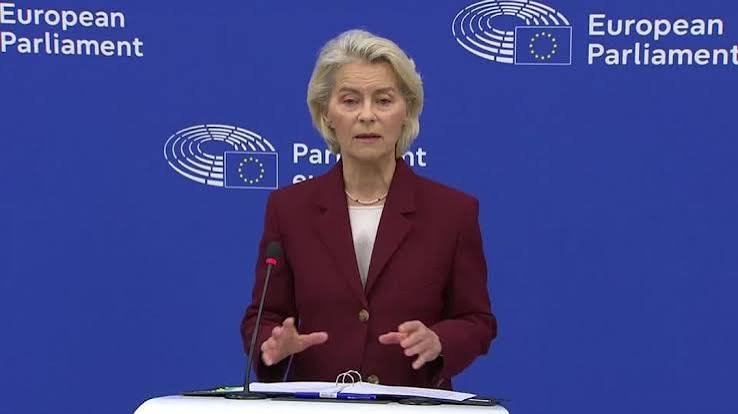
The European Commission has proposed new restrictions on children’s access to social media, including parental supervision and a one-hour daily limit for children aged 13 and 14, under a legislative initiative aimed at strengthening online safety across the European Union.
The proposal, known as the EU KIDS Act — EU Keeping Internet Digital Spaces Accountable and Trustworthy was formally adopted by the Commission on September and forwarded to the European Parliament and the Council of the European Union for consideration.
The proposed regulation seeks to establish common rules for protecting children from harmful online content, unwanted contact, excessive screen time and digital features that encourage prolonged engagement with social media platforms.
Under the proposed framework, children below 13 would not be allowed to access social media services. Those aged 13 and 14 could use restricted accounts managed by parents or guardians, with limited features and a maximum of one hour of daily use. From age 15, young people would be permitted to open and manage their own social media accounts.
The proposed rules would introduce different levels of access based on age, with parents and guardians playing a central role in managing younger teenagers’ online activities.
Children aged 13 and 14 would be able to use supervised accounts with restricted functionality rather than unrestricted personal accounts. The Commission says the approach is intended to provide a gradual transition towards independent use of social media.
The proposal also requires stronger age-verification measures. Social media and video-sharing platforms would be required to verify users’ ages when new accounts are opened, while app stores would face requirements to strengthen age assurance.
The Commission has identified privacy-preserving age-verification technology as a way to enforce age restrictions without unnecessarily exposing users’ personal information.
Technology companies face greater responsibility
The EU KIDS Act would require online services used by minors to provide stronger protections by default.
Proposed measures include making minors’ profiles private by default, preventing unsolicited contact from strangers and providing accessible tools for blocking or muting other users.
Platforms would also face restrictions on features associated with excessive use, including infinite scrolling, manipulative reward mechanisms and push notifications during sleeping hours.
The proposal extends beyond social media to certain video-sharing platforms, online games, AI companions and conversational chatbots.
AI companions and chatbots covered by the proposed rules would have to be switched off by default and prevented from engaging with children in ways that could foster emotional dependency.
A significant element of the initiative is its proposed shift in the burden of proof for very large online platforms. Rather than leaving regulators to establish every potential risk, covered providers would be required to demonstrate that their services are appropriately designed to protect children’s safety and wellbeing.
The initiative reflects growing concern among European policymakers about children’s exposure to harmful online material, cyberbullying, inappropriate contact and platform designs that encourage excessive screen time.
The Commission’s approach places responsibility on both parents and technology companies. While parents would have tools to supervise younger users, platforms would be expected to build safeguards into their services rather than rely solely on families to manage the risks.
However, the proposed restrictions also raise questions about implementation, privacy and children’s access to useful information, educational resources and social interaction.
Effective enforcement would require reliable age-verification systems and measures to prevent children from circumventing restrictions, while ensuring that personal information is adequately protected.
The final rules will also need to balance child protection with legitimate uses of digital platforms by young people.
The EU KIDS Act is not yet an EU-wide law in force. Following its adoption as a legislative proposal by the European Commission, it must be examined by the European Parliament and the Council of the European Union, which represents the member states.
The two institutions will negotiate and decide on the final legislative text before the proposal can become law. Its provisions may therefore change during the legislative process.
If adopted, the regulation would establish a common framework for children’s access to social media and strengthen the obligations placed on digital service providers across the bloc.
The outcome will be closely watched by technology companies, parents and child-protection advocates as European lawmakers consider how best to protect minors online without unnecessarily restricting their access to digital communication and learning.
Reloaded News — NEWS THAT INFORMS. MEDIA THAT TRANSFORMS