
APM, Makinde’s Presidential Campaign Face Questions Over Women and Youth Inclusion
A presidential campaign cannot preach inclusion to Nigerians while leaving questions about participation and support unanswered within its own political structure.

By Reloaded News Desk
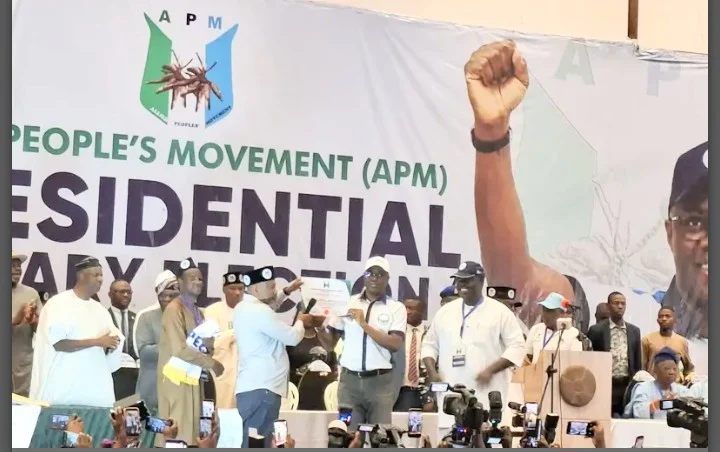
Governor Seyi Makinde’s presidential ambition under the Allied Peoples Movement (APM) is expanding, but the campaign must answer an important question about the place of women and young people in the political structure expected to drive its national ambitions.
A group within the party has raised allegations that women and youths are being neglected. The allegation deserves scrutiny, not dismissal, particularly at a time when the campaign is presenting itself as a platform for a new national political direction.
The issue is what does inclusion mean if those expected to organise, mobilise and sustain the party at the grassroots do not have the support required to perform their responsibilities?
Makinde has publicly called for an inclusive campaign structure. When he inaugurated the APM’s apex campaign council in Oyo State in July, he urged its members to engage stakeholders and integrate existing party structures. The council also named directors for its women’s and youth wings.
These are important organisational steps. But appointments alone cannot settle the question of inclusion.
A campaign structure must do more than assign titles. Its party officers need access to leadership, opportunities to contribute to decisions, clear responsibilities and the practical means to carry out approved activities. Without these, representation risks becoming a matter of appearance rather than participation.
Women are central to political organisation, community engagement and grassroots mobilisation. Young people bring energy, networks, ideas and the ability to connect political messages with a new generation of voters. Neither group should be treated as an audience to be mobilised only when the campaign needs numbers.
The same principle applies to the party’s internal leadership. National and state structures cannot function effectively if their responsibilities are not matched by the administrative support and resources necessary to deliver on their mandates. The party should be able to explain how its different organs are supported and how concerns about operational difficulties are addressed.
This is where the APM leadership needs to provide clarity. What arrangements are in place to support the work of its women’s and youth structures? How are campaign activities prioritised and funded? What channels can party officers use when they believe their responsibilities are not being adequately supported?
These are reasonable questions for a party seeking a national mandate. They do not require the exposure of individual party officials or the publication of private conversations. They require an explanation of how the organisation works and whether its stated commitment to inclusion is reflected in practice.
Makinde’s campaign has an opportunity to address the matter directly. It can explain the support available to its women’s and youth party structures, demonstrate how their leaders participate in decision-making and establish a clear process for resolving complaints.
The anonymous group’s allegations do not, by themselves, establish that Makinde personally ordered anyone’s exclusion. But the campaign should not allow uncertainty over the treatment of important party constituencies to become a persistent question as its national ambitions gather momentum.
A presidential project requires more than a prominent candidate and a growing campaign council. It needs a party whose members understand their roles, trust its internal processes and have a meaningful stake in its direction.
APM Women and youths wing must be participants in the political project, not merely instruments for delivering its electoral objectives.
If the APM intends to make inclusion part of its national message, its leadership should ensure that the principle is visible in the way the party organises, supports and listens to its own people. The test is not simply who receives an appointment, but whether those appointed and the constituencies they represent can contribute meaningfully to the work ahead.
News that informs, Media that Transforms.