

Inside Day Five at IBA Copenhagen: Legal Profession Under Pressure as AI, Ethics and Judicial Independence Take Centre Stage
Nigerian lawyers feature prominently as the IBA examines the future of legal practice, judicial neutrality, African corporate governance and the changing global legal market

By Reloaded News Desk
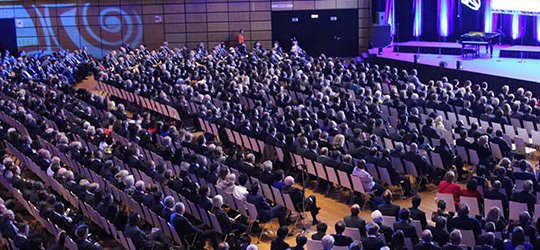
Day Five of the 2026 International Bar Association Annual Conference in Copenhagen placed the legal profession itself under the microscope, with lawyers and judges examining pressures coming from artificial intelligence, regulation, ethics, organised crime, changing business models and questions surrounding judicial independence.
The Thursday programme brought together discussions that went beyond individual areas of legal practice and focused on how the profession can maintain its standards and public confidence while the environment around it changes rapidly.
One of the day’s major sessions was the three-hour “A profession under pressure” programme, chaired by Nigerian Senior Advocate Babatunde Ajibade SAN, Chair of the IBA Section on Public and Professional Interest.
The programme brought lawyers together in roundtable discussions on regulation, ethics and accountability, public service, law-firm management and the next generation of lawyers before a panel session considered the key issues emerging from the discussions.
The IBA described the profession as operating under unprecedented strain, with regulatory pressure increasing, ethical boundaries being tested and artificial intelligence creating both opportunities and new risks.
For younger lawyers, the discussion also addressed a profession that is changing substantially from the environment in which previous generations built their careers.
The Human Lawyer in the Age of AI
Artificial intelligence remained one of the strongest themes of the day.
A dedicated session, “How to keep (human) lawyers intelligent in the age of AI,” examined how lawyers and law firms can continue to develop professional judgment and add value as AI takes on an increasing range of legal tasks.
The discussion was not simply about adopting new technology.
It focused on maintaining the intellectual and professional capabilities that lawyers need when technology becomes deeply integrated into legal work.
Another session examined AI and digital innovation in the global trade in legal services.
The IBA noted that digital technology is reducing traditional barriers to cross-border legal practice, allowing lawyers to research foreign markets and serve clients across jurisdictions.
At the same time, the session examined risks involving confidential information, unqualified service providers, over-reliance on AI-generated material, local regulatory requirements and the erosion of independent professional judgment.
When Criminal Power Meets Legal Ethics
The legal profession’s relationship with organised crime was another major subject.
The session “When illicit power meets legal ethics: strengthening the rule of law worldwide” examined how illegally obtained money can be used to acquire influence, corrupt institutions and penetrate legitimate businesses.
The discussion also addressed the position of lawyers as advisers, gatekeepers and defenders and the professional obligations that arise when lawyers encounter suspicious clients or funds.
The IBA framed the issue as both a legal and ethical challenge, particularly because criminal influence can weaken public confidence in justice institutions and the rule of law.
Nigerian Voice in Debate on Judges as Arbitrators
Nigeria also featured prominently in the afternoon programme.
Isaiah Bozimo SAN, of Detail Dispute Lawyers in Abuja, chaired the session “Judges as neutrals: the role of sitting judges in arbitration and mediation.”
The discussion examined jurisdictions where sitting judges may also serve as arbitrators or mediators and the questions this creates around impartiality, procedural integrity, public perception and the performance of judicial duties.
The session also considered whether the concerns are different when judges act as mediators rather than arbitrators.
The subject is particularly important for legal systems where confidence in judicial independence remains central to the credibility of the justice system.
Africa’s Corporate Governance Challenge
The African Regional Forum also placed corporate governance and anti-corruption under discussion.
The session “Corporate governance, anti-corruption and compliance in African business” examined the importance of compliance and transparency frameworks for businesses operating lawfully across Africa.
Nigeria was represented by Chiagozie Hilary Nwokonko of Streamsowers & Köhn, Lagos, and Fahd Isa of NNPC Limited, Abuja.
The discussion placed corporate compliance within the wider challenge of ensuring that African businesses operate within transparent and accountable legal frameworks.
AI and Confidential Information
Another afternoon session examined the increasingly difficult relationship between AI tools, remote work and confidential information.
The session considered how employees’ use of AI systems can expose employers to overlapping risks involving data protection, employment law and cybersecurity.
It also examined the potential consequences of inadequate organisational policies, including liability for breaches, disclosure of trade secrets and regulatory action.
The issue reflects a growing reality for modern law firms and businesses: controlling information is becoming more complicated as employees increasingly use technology across borders and outside traditional workplace systems.
Lawyers and the Digital Reputation
The profession’s relationship with social media was also examined during the day.
A dedicated session considered legal marketing in the digital age, including lawyers’ use of LinkedIn, Instagram and TikTok to build professional profiles and attract clients.
The discussion focused on the point at which legitimate professional promotion can become misleading or inconsistent with professional ethics.
It also examined confidentiality, client testimonials, online legal advice and the risks associated with lawyers adopting influencer-style content.
The Global Legal Market Is Being Rewritten
The day’s programme also reflected how quickly the international legal market is changing.
The afternoon sessions covered issues ranging from cross-border tax investigations and criminal liability to corporate restructuring, public procurement, military contracting and international M&A.
The M&A Café, scheduled for the late afternoon, brought international M&A practitioners together in rotating roundtable discussions covering due diligence, foreign investment and merger control, AI’s impact on deal-making, geopolitics and private equity transactions.
The range of subjects demonstrates how modern legal practice increasingly cuts across technology, finance, geopolitics, business and regulation.
A Profession Being Forced to Adapt
Day Five has therefore been less about one particular branch of law and more about the future of the profession itself.
The questions confronting lawyers are increasingly interconnected.
Artificial intelligence is changing how legal work is performed.
Digital platforms are changing how lawyers find clients and communicate with the public.
Cross-border business is creating increasingly complex regulatory environments.
Organised crime is testing professional ethics and institutional resilience.
And questions about judicial neutrality continue to shape debates around arbitration, mediation and public confidence.
For Nigerian lawyers participating in the Copenhagen conference, the discussions provide an opportunity not only to follow global developments but also to contribute Nigerian experience to international conversations about the future of law.
With the conference entering its final day, one message from Thursday stands out: the lawyer of the future will need to understand technology and the global economy, but professional judgment, independence, ethics and public trust will remain at the centre of the profession.
News that informs, Media that Transforms.