
OCTOBER 1 CNG TARGET: Where Is Osun’s Transport Plan?

Reloaded News Desk
With October 1 fast approaching and the Federal Government pushing states to deliver lower transport fares through Compressed Natural Gas and electric vehicles, a question is becoming increasingly difficult to ignore in Osun State:
Where is Osun’s CNG transport programme today?
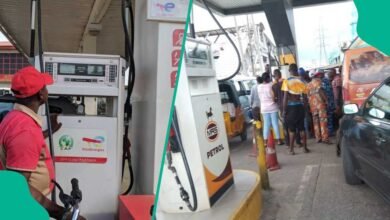
The question became urgent on Wednesday when commercial minibus operators, popularly known as Korope drivers, protested in Osogbo over rising petrol costs and specifically demanded the availability of CNG refuelling facilities in the state.
The drivers said many operators were interested in converting their vehicles but could not rely on CNG because of the lack of accessible refuelling infrastructure in Osun.
One of the protesters said drivers who already had CNG systems installed were effectively unable to use them because they could not identify a station in the state where they could regularly refuel.
The complaint is significant because Osun’s government announced its CNG programme two years ago.
In September 2024, the state government said it had been implementing a CNG conversion and adoption initiative since January of that year.
The government announced plans to convert the Imole buses to CNG, establish dedicated charging or refuelling points, acquire additional CNG-powered buses through public-private partnerships and work with the Federal Government and private companies to expand the programme.
The government also said it was in discussions with three companies, including a local CNG firm, over implementation. Two years later, however, residents are asking what has actually reached the road.
The latest information available from the Presidential Initiative on CNG and Electric Vehicles provides an important measure.
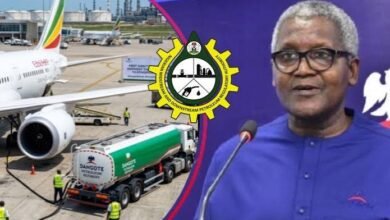
The Federal Government’s current CNG refuelling-station directory lists 91 certified stations across 23 states.
For Osun, the directory currently identifies Femadec Energy Limited at Obafemi Awolowo University, Ile-Ife. It does not currently list a certified CNG refuelling station in Osogbo, that shows lack of unseriousness on the part of the state government.
A CNG facility in Ile-Ife may contribute to the state’s clean-energy network, but it does not solve the immediate refuelling problem for hundreds of commercial minibuses operating daily within Osogbo.
And the distance between the policy announcement and the infrastructure available to transport operators is now being exposed by the drivers themselves.
Nevertheless, the state has not abandoned the CNG idea.
An official Osun climate-change initiative currently describes a Green Mobility Programme covering Osogbo, Ile-Ife and Ilesa. The programme says it works with transport unions to facilitate CNG conversion for petrol-powered commercial vehicles and reports that more than 500 vehicles have been converted to clean fuel.
But the publicly available information does not provide the critical details needed to assess that claim fully.
It does not show how many of the 500-plus vehicles are specifically CNG vehicles, how many are electric, which transport operators received the conversions, the locations of the conversion facilities, or how many of the converted vehicles are currently operating commercially.
Those details matter because conversion without refuelling infrastructure does not deliver cheaper transport.
A driver can own a converted vehicle and still be forced back to petrol if CNG cannot be obtained conveniently.
October 1 changes the question
The Federal Government has now moved the issue beyond a general energy-transition policy.
President Bola Tinubu said after meeting the 36 governors on August 27 that the objective was for Nigerians to begin seeing measurable reductions in transportation costs from October 1.
An implementation committee was subsequently established under the Nigeria Governors’ Forum.
The Presidency has pointed to states where CNG and electric buses are already producing measurable fare reductions.
In Borno, alternative-energy buses are carrying passengers for between ₦50 and ₦100 on routes where commercial operators charge between ₦300 and ₦600.
Kaduna’s CNG buses have provided free transportation on major routes.
In Oyo, CNG buses on Pacesetter Transport reduced the Lagos-Ibadan fare from about ₦8,000 to ₦3,200 during the initial deployment.
In Enugu, 100 CNG buses reduced the Enugu-Nsukka fare from ₦2,500 to ₦1,500.
The Federal Government has therefore established a clear policy direction; cheaper energy should produce cheaper transportation.
Osun’s challenge is converting that national objective into something an ordinary passenger in Osogbo can actually experience.
The Korope protest has exposed the gap
The drivers’ protest on Wednesday came with a new fare structure.
The minimum fare is being increased from ₦200 to ₦300 from Thursday, September 24, according to the Association of Korope Drivers.
That means commuters are being asked to pay more at almost exactly the moment when the Federal Government is asking states to prepare for cheaper transportation from October 1.
The drivers’ explanation is straightforward: petrol, spare parts and other operating costs have risen, while the existing fares no longer provide enough income.
Some drivers told journalists they can spend as much as ₦40,000 a day on petrol.
They are therefore asking for two things at the same time: permission to charge fares that reflect their operating costs and access to a cheaper fuel alternative.
That is where CNG becomes more than an environmental policy.
It becomes a transport-price policy.
Osun’s record needs to be measured
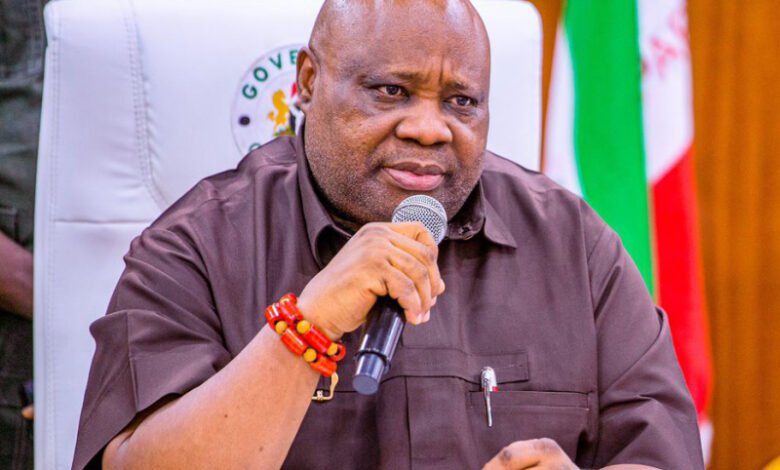
The evidence available today does not justify saying that the Adeleke administration has done nothing about CNG.
It announced the programme in 2024.
It said it was negotiating with private-sector partners.
It announced plans to convert Imole buses.
The state’s climate initiative now reports more than 500 clean-fuel vehicle conversions.
Those are developments that should be acknowledged.
But the available evidence also leaves important questions unanswered.
How many Osun-owned Imole buses have actually been converted to CNG?
How many commercial Korope vehicles have been converted?
How much has the state spent on the programme?
Which private companies were contracted or partnered with?
Where are the dedicated CNG refuelling facilities promised in 2024?
What happened to the proposed PPP arrangements?
How many of the reported 500-plus clean-fuel conversions are CNG rather than other forms of clean mobility?
How many converted commercial vehicles are currently operating in Osogbo?
And, perhaps most importantly:
What specific transport intervention will Osun deliver by October 1 to bring down fares?
These are not questions about political allegiance.
They are questions about implementation.
The infrastructure problem cannot be ignored
The current federal CNG directory shows that the national network is expanding, but Osun’s representation remains almost nothing.
The directory lists a certified CNG facility at Obafemi Awolowo University in Ile-Ife, while nearby states have several listed facilities.
Oyo, for example, has multiple listed stations, including facilities in Ibadan, while Ogun also has several.
For an Osogbo commercial driver, however, having CNG infrastructure hundreds of kilometres or even outside the normal operating corridor does not constitute a practical transport solution.
The business model requires fuel to be available where the vehicles operate.
That is why the Korope drivers’ demand for an Osogbo-based CNG solution deserves serious attention.
What happens next?
The coming days will provide a clear test.
If Osun already has a functioning CNG conversion programme, the government can publish the numbers.
If more than 500 vehicles have been converted to clean fuel, the state can identify the number that are CNG-powered and provide their locations.
If PPP agreements have progressed, the government can disclose the participating companies and the stage of implementation.
If CNG refuelling facilities are being developed in Osogbo, their locations and commissioning timelines can be made public.
And if the state has a transport plan tied to the October 1 federal target, commuters should know what they are expected to receive.
The issue is no longer simply whether CNG is cheaper than petrol.
The Federal Government has already made that case.
The real question for Osun is whether the infrastructure, converted vehicles and state-supported transport arrangements exist in sufficient numbers to turn that cheaper energy into cheaper journeys.
Wednesday’s Korope protest has brought that question directly onto the streets of Osogbo.
Reloaded News — NEWS THAT INFORMS. MEDIA THAT TRANSFORMS